
A Bundaberg Macadamia Exporter Drops the ISPM-15 Paperwork for Good
A Bundaberg macadamia exporter shipping to Asia.

The operation
This is a macadamia grower-exporter around Bundaberg in coastal Queensland, shipping bagged and cartoned product to wholesalers across Asia. Like every Australian exporter moving goods on timber, they were caught by ISPM-15, the international rule that requires wood packaging to be heat-treated or fumigated and certified before it crosses a border.
The problem with the old handling
Every outbound container on timber pallets meant ISPM-15 heat-treatment, a treatment certificate, and the risk of re-inspection at the destination port. That was a recurring cost line and a recurring source of delay, paperwork to raise per consignment, and the real possibility of a pallet being flagged and the consignment held at the Asian end while it was sorted out. Timber pallets also added handling time and the occasional rejected-pallet hold-up that nobody could fully predict.
Why this pallet
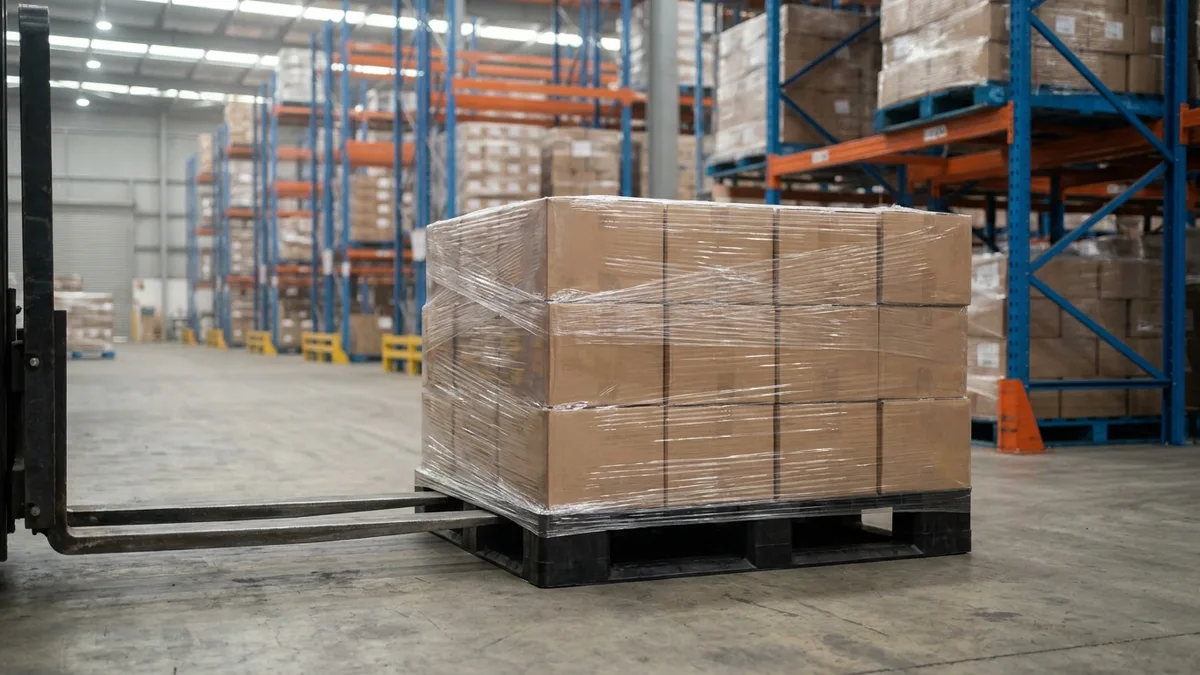
They moved to the BPB-1111, a very light nestable square (Asian-footprint) plastic shipping pallet built specifically for export to Asia. It is a 1100 x 1100 mm pallet at 135 mm tall, moulded from PE, weighing just 7 kg, and rated to 2,500 kg static and 1,000 kg dynamic on a 9-foot base. Two things made it the right call.
First, because it's plastic, it is exempt from ISPM-15 entirely, no heat treatment, no fumigation, no treatment certificate. The per-consignment treatment paperwork simply disappears, and with it a recurring cost and a recurring delay. Second, the 1100 x 1100 square footprint matches the racking their Asian buyers use, and the pallet nests down when empty, so it suits either cheap nested return or low-cost one-way shipping. At 7 kg it's also easy to handle manually.
The rollout
This is a mass-export pallet with a large minimum order (in the hundreds), so the exporter adopted it as their standard Asia-lane pallet rather than trialling a handful. They aligned the square footprint with their buyers' racking, switched their outbound documentation to drop the treatment step, and set up either nested return or one-way disposal depending on the lane. The nestable form kept any empties that did come back from eating container space.
The result, estimated
The clearest win is the removal of a whole cost-and-compliance step, framed as an estimate. Dropping ISPM-15 treatment and certification took a recurring treatment cost line out of the export budget and removed the certificate paperwork per consignment. On handling, we estimate the change trimmed roughly 1-2 hours of handling per outbound container, the treatment-and-certify loop, and the rejected-pallet hold-ups at the destination port, largely went away.
There's a knock-on at the buyer's end too: plastic pallets don't get flagged at biosecurity the way timber can, so fewer consignments hit a hold, and the buyers stopped dealing with timber-pallet disposal on arrival. We frame the savings as estimates because exact treatment costs and handling times vary by lane and consignment, but the structural change is unambiguous: an export pallet that is simply exempt from the timber rules that were costing time and money on every shipment.