
How a pharmaceutical 3PL kept its Euro exports treatment-free and repairable with a medium-duty snap-on-skid pallet
A Western Sydney pharmaceutical 3PL exporting to Europe.

The operator
This is a third-party logistics provider in Western Sydney handling pharmaceutical and healthcare freight, including a steady export programme of validated cartons into Europe. In a regulated pharma supply chain the pallet has to be clean, predictable and able to clear biosecurity without drama, and because the 3PL ships in volume, the per-pallet economics matter. They asked us for a medium-duty Euro pallet that avoided timber import controls and did not have to be scrapped the moment a foot got damaged.
The problem with the old handling
Export cartons were going to Europe on timber Euro pallets. Timber attracts ISPM-15 heat treatment and certification on every outbound consignment, which adds cost and lead time and creates a biosecurity-hold risk at strict European entry points. Timber also sheds splinters and the odd nail near validated pharmaceutical packaging, which is exactly what a GMP-conscious operation does not want. And when a timber pallet is damaged, the whole unit is effectively scrapped, there is no cheap repair, so the 3PL was buying and disposing of one-trip timber at volume.
Why this product
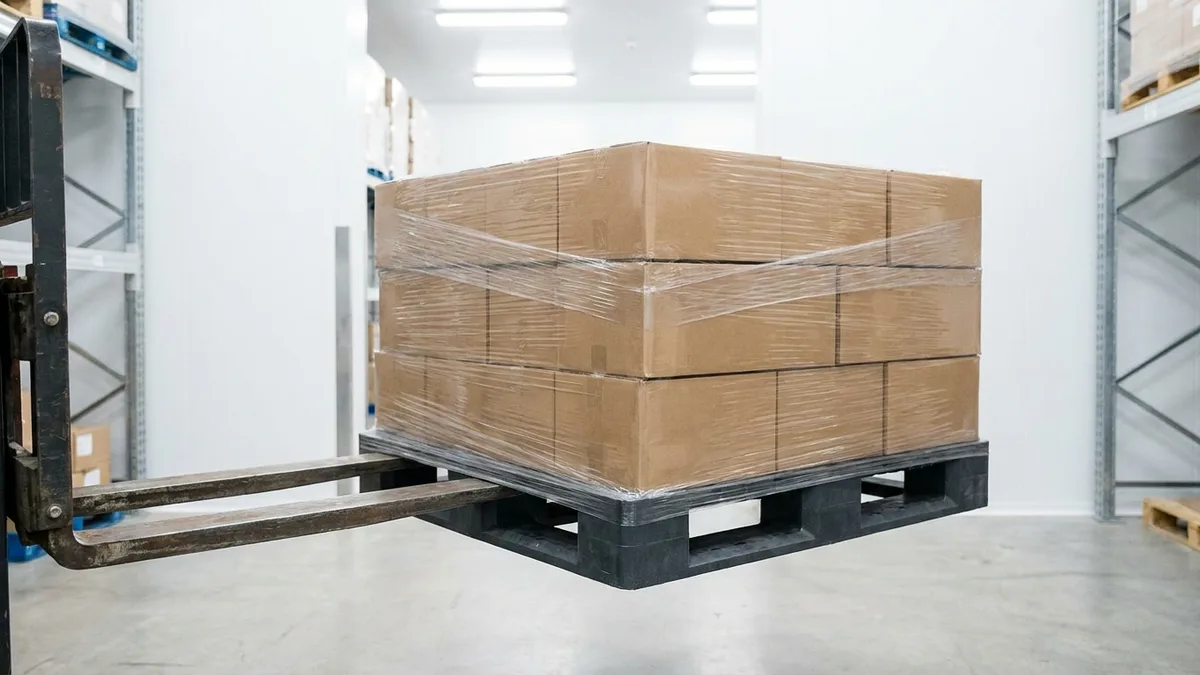
They moved to the Medium Duty Plastic Pallet (BPB-1208-3): a 1200 x 800 mm Euro export pallet moulded from PE at 8.1 kg, rated to 2,500 kg static and a solid 1,200 kg dynamic, on a nine-foot base with three snap-on skids, 4-way entry, and both nestable and stackable. The spec fits a pharma export operation. As a plastic pallet it is exempt from ISPM-15, so the fumigation, certification and quarantine-hold risk on the European legs simply disappear. The smooth deck has no splinters or loose nails near validated cartons. The 1,200 kg dynamic rating handles forklift work with a useful load, and the three snap-on skids are the clever part, a damaged foot is swapped individually rather than scrapping the whole pallet, so the unit keeps working where timber would have been binned. Nesting keeps storage compact between runs.
The rollout
They put the pallet onto the European export lanes and into general medium-duty rotation. Dropping the ISPM-15 step took cost and lead time straight out of each consignment and removed the border-hold worry the team had been carrying. When skids did get knocked in forklift handling, the crew replaced the individual foot rather than condemning the pallet, which kept units in service far longer than the one-trip timber had managed, and the nestable empties kept the store tidy.
The estimated result
We present the savings as estimates because they depend on export volume and how hard the pallets are handled. On the export legs, skipping fumigation and certification we estimate saves on the order of a meaningful sum per consignment and removes a recurring biosecurity-hold risk at strict European entry. On asset life, the replaceable snap-on skids and reusable deck displace several one-trip timber pallets over the unit's life, instead of scrapping a whole pallet for one broken foot, the 3PL swaps a skid and keeps going. Together we estimate the pallet lowers both the export-packing cost and the recurring pallet spend across a shipping season, while keeping validated pharmaceutical freight on a clean, splinter-free deck.