
How a Bowen Basin warehouse stood up shutdown racking fast with second-hand heavy-duty ISO pallets
A Bowen Basin coal-region warehouse.

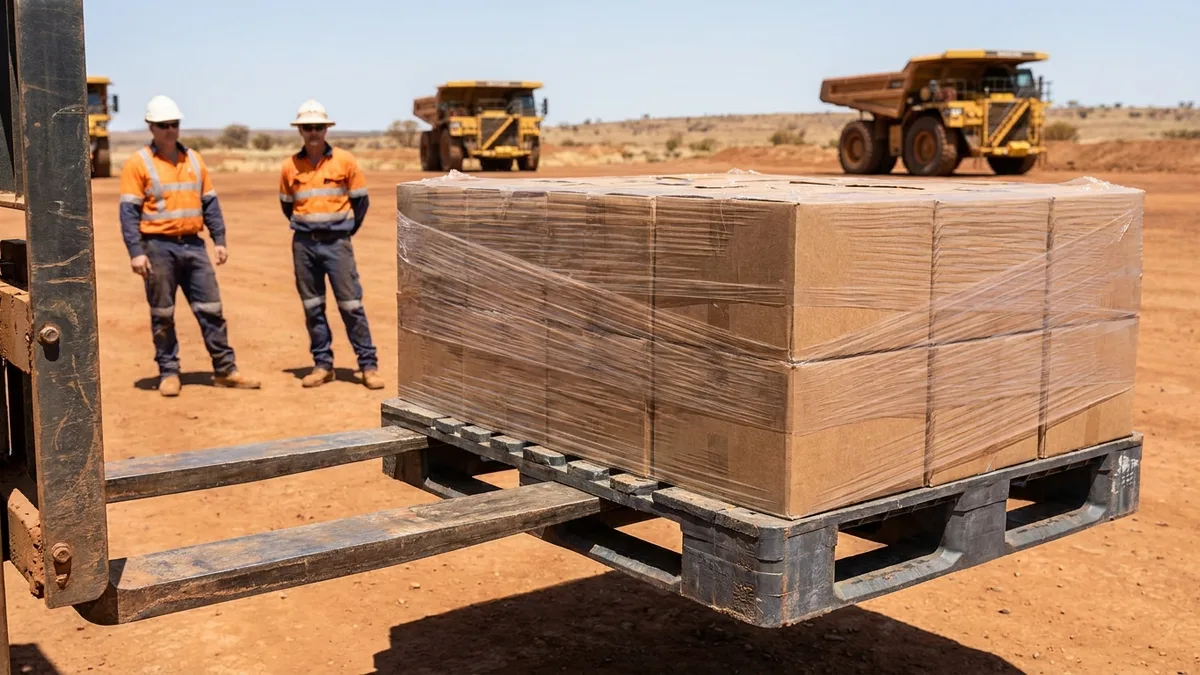
The operator
This is a supply-and-maintenance warehouse serving coal operations in Queensland's Bowen Basin, the kind of store that has to flex hard around major shutdowns. When a shutdown is scheduled, the warehouse temporarily takes on a surge of spares, components and consumables, which means standing up extra racking and the pallets to fill it, fast, and without a big capital case. They came to us needing heavy-duty pallets for a defined, time-boxed capacity spike, where buying new could not be justified.
The problem with the old handling
The capacity they needed was real but temporary, which is an awkward shape to fund. New heavy-duty pallets are a capital outlay sized for permanent use, and committing that for a few months of shutdown overflow is hard to justify on a budget. Their other option, pulling damp-store timber spares out of the back, came with the chronic Bowen Basin problems of rot and termites in a humid shed, so those boards were unreliable and short-lived exactly when they were needed most. They needed compliant, durable racking pallets, but only for a while, and only cheaply.
Why this product
They took second-hand Heavy Duty Used ISO Pallets (BPB-120UH): reconditioned 1,200 x 1,000 mm pallets in a mix of makes across PC, PO and HDPE, rackable and stackable, supplied at a used price point. For a finite capacity surge this is the right tool. The reconditioned plastic decks carry racked and stacked loads reliably for the duration of a shutdown, but at a fraction of new-pallet cost, so the warehouse gets compliant racking capacity without a capital case sized for permanent use. Being plastic, the used pallets also sidestep the rot and termite problems that plague the timber spares in a humid Bowen Basin shed, so the cheap option is also the more dependable one. The 32-unit MOQ matched a sensible block of temporary racking.
The rollout
They brought the used pallets in ahead of the shutdown and filled the extra racking with them. In service the reconditioned decks performed like the heavy-duty units they are, rackable, stackable and durable through the surge. When the shutdown wound down, the pallets simply rolled into general rotation rather than being a stranded capital asset, and unlike timber they had not rotted or been eaten in the humid store while they waited.
The estimated result
We frame these as estimates, because used-versus-new pricing and project length vary. On cost, buying reconditioned rather than new, we estimate the warehouse saved on the order of 40-60% of the pallet outlay, the decisive factor for capacity that was only needed for a few months. Beyond the headline saving, the plastic decks avoided the rot and termite write-offs the timber alternative would have suffered in the humid shed, so the cheaper route was also the more reliable one through a high-stakes shutdown. For a store that flexes around shutdowns, we estimate second-hand heavy-duty pallets are the most cost-effective way to add temporary, compliant racking capacity.