
How a regional pet-food manufacturer protected 1,400-litre ingredient boxes from contamination with a one-piece giant lid
A regional Australian pet-food manufacturer.

The operator
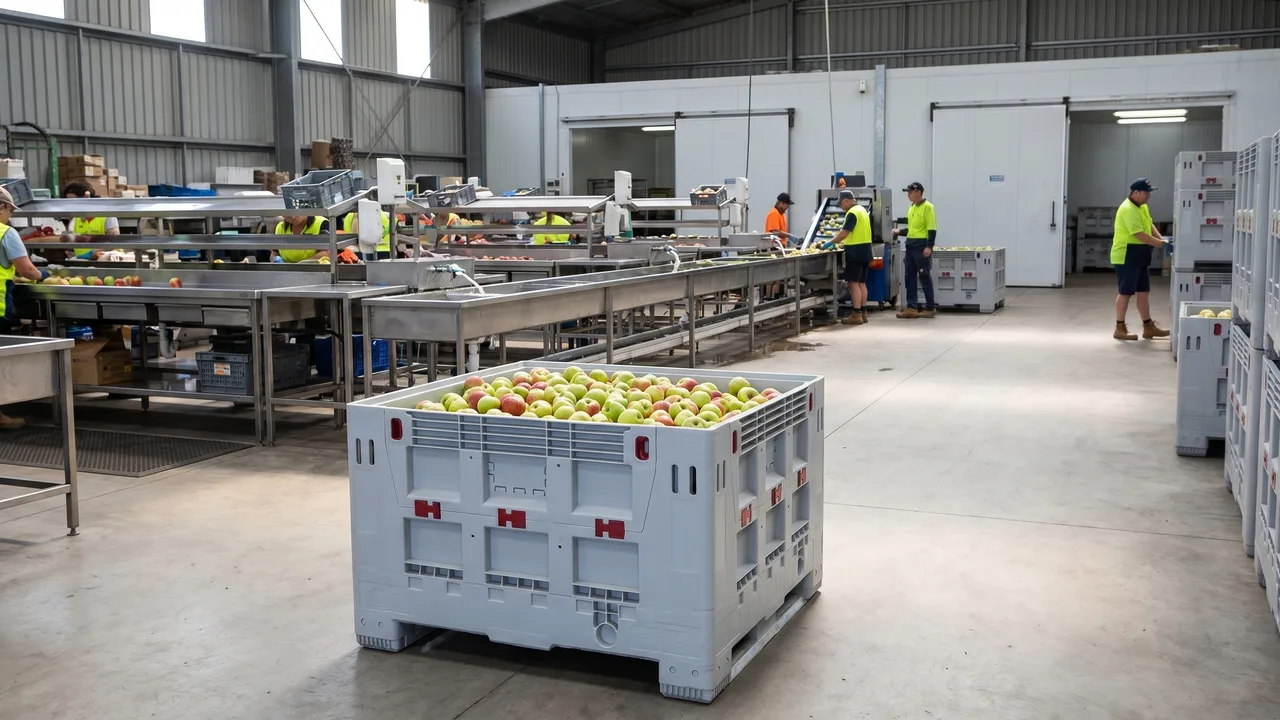
This is a regional pet-food manufacturer in eastern Australia, running a high-volume warehouse where dry ingredient, meals, grains and premixes, is bought in bulk and held in giant pallet boxes before it is drawn down into production. They already ran the largest one-piece solid box in the range (the 1,300 x 1,150 x 1,250 mm, 1,400 L giant box) for that ingredient, but they had a gap in the system that was quietly costing them product.
The problem with the old handling
The giant boxes were open at the top. In a busy ingredient warehouse that is a real exposure: dust and airborne debris settle into an open box, moisture can creep in, and, the worst case for a food-grade operation, open boxes are an open invitation to vermin and pests. Their interim fix had been improvised covers and sheeting, which never sat properly on a box that size. A cover that gaps at the corners does almost nothing, and every open or badly-covered box of ingredient carried a contamination risk that, on 1,400 L of product, is a significant write-off if it goes wrong.
Why this product
They specified the Lid for the Giant Plastic Pallet Box (BPB-1311L): a one-piece cover moulded in PE to the 1,300 x 1,150 mm footprint, weighing just 9.45 kg. The point of the product is that it is made in a single piece to suit the largest solid box in the world, so it actually seals the box rather than draping over it. A proper drop-on lid closes the giant box against dust, moisture and vermin, turns an open ingredient store into a covered one, and lets boxes stack cleanly. At 9.45 kg one person can lift and place it, so capping a box is a quick, routine step rather than a two-person job, and the 36-unit MOQ matched a sensible fleet of giant boxes.
The rollout
The lids went straight onto the existing giant boxes with no change to handling, same box, same forklift, now closed. The warehouse crew adopted them immediately because the improvised sheeting had been a daily annoyance, and a moulded lid that simply drops on and sits flat removed that friction. Stacking the boxes became cleaner and safer with a flat lid surface to bear on, and the ingredient underneath was, for the first time, genuinely protected from the warehouse environment.
The estimated result
We frame the benefit as an estimate and as risk avoided rather than a line-item saving, because the value is in the contamination event that does not happen. The economics are stark: a 9.45 kg lid is a trivial cost against 1,400 L of dry ingredient, so covering even one box that would otherwise have been dusted, dampened or reached by pests pays for the lid many times over. Across a fleet, we estimate the lids effectively eliminate the open-box contamination write-offs the operation had been quietly absorbing, while making the giant boxes stackable and the warehouse tidier, a small, durable, reusable part that retires a disproportionate amount of product risk.