
How a Pilbara minerals site cut bulk-bag spill incidents with an oversized second-hand FIBC pallet
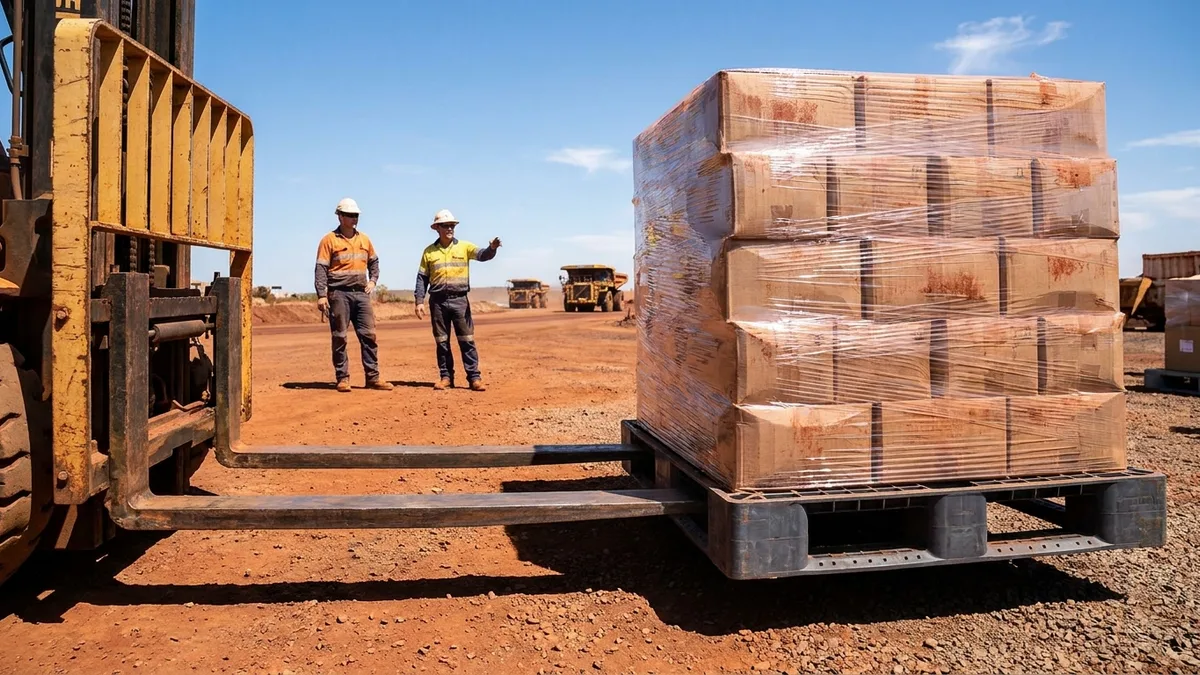
A Pilbara minerals operation handling one-tonne bulk bags.

The operator
This is a minerals operation in the Pilbara that moves and stores reagents and consumables in one-tonne bulk bags, FIBCs, around its site and store. Bulk bags are an awkward load: heavy, soft-sided and prone to slumping outward at the base, which makes the pallet under them more important than people assume. They came to us because the pallets they were using were the wrong size and shape for a one-tonne bag, and it was causing handling problems and spills, but they also wanted to keep the spend down.
The problem with the old handling
The bulk bags were being set on standard pallet footprints that were simply too small for them. A one-tonne FIBC sitting on an undersized deck overhangs the edges and slumps over the sides, which makes the bag unstable to lift and move, concentrates load where the pallet does not support it, and leads to bag damage and spilled material, a costly, messy and time-consuming failure with reagents. They needed a pallet sized to the bag, but a brand-new oversized specialty pallet is a meaningful cost, and they wanted a more economical route.
Why this product
They took the second-hand Used Bulk Bag Plastic Pallet (BPB-1311UM): a 1,300 x 1,100 mm export pallet, 150 mm tall, moulded from PP at 10.5 kg, rated to 4,500 kg static and 1,500 kg dynamic, on a cruciform full-perimeter base, 4-way, and, at the time, on special at a used price. Two things make it the right answer. The 1,300 x 1,100 footprint is purpose-shaped to support a one-tonne bulk bag fully rather than letting it overhang and slump, so the bag sits stable and the load is properly carried; the cruciform full-perimeter base and 1,500 kg dynamic rating mean a forklift can move a loaded bag safely. And because the operation bought used and on special rather than new, it got that purpose-built oversized footprint at a fraction of the new-pallet cost. The MOQ of 96 suited a fleet sized to a real bulk-bag operation.
The rollout
They moved their one-tonne bags onto the oversized used pallets across handling and store. With the bag fully supported on the larger footprint, the slumping and overhang that had caused the instability and spills was designed out, and the bags became safer to lift and stack. The reconditioned PP decks handled the heavy point loads of full bags without trouble, and the operation got the right pallet for the job without paying a new-specialty price.
The estimated result
We frame these as estimates, because spill rates and pricing vary with operation and timing. On safety and loss, sizing the pallet to the bag rather than overhanging a standard deck, we estimate a clear reduction in the bag-slump and spill incidents that had been costing material and clean-up time, the operational reason for the change. On cost, buying used and on special rather than a new oversized pallet, we estimate a saving on the order of 40-50% versus new. For a site handling heavy, point-loaded, soft-sided bags, we estimate the oversized second-hand FIBC pallet is the most cost-effective way to make bulk-bag handling both safer and cheaper.