
A rackable ISO pallet ends termite write-offs at a North Queensland sugar-and-ag depot
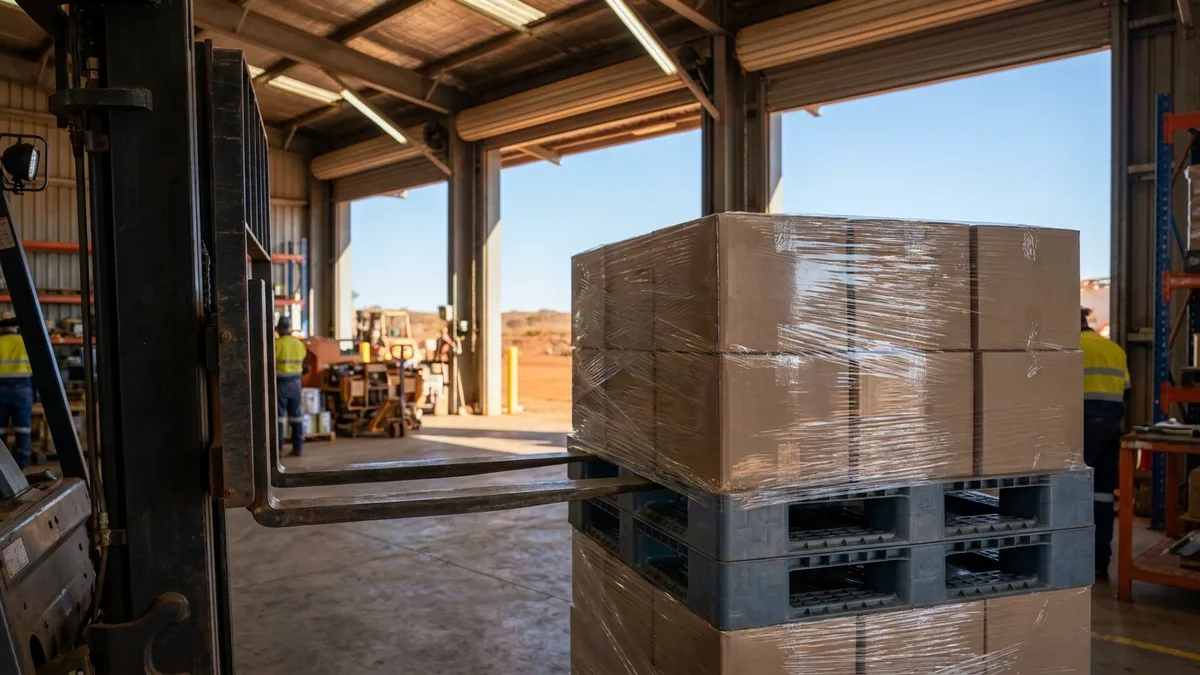
A North Queensland sugar-and-agricultural-services depot racking fertiliser and consumables.

The operator and the problem
A North Queensland sugar-and-agricultural-services depot was racking fertiliser, chemical and general consumables on timber pallets that the tropical north was quietly destroying. Termites ate into the boards, the wet-season humidity rotted them, and fertiliser handling left them soiled and absorbent. Beyond the recurring replacement cost, condemned timber in the racking is a safety and audit problem: a board that fails in a beam can drop a load, and an inspector who finds rotten, insect-damaged pallets in the racking writes it up. The depot was binning pallets on what had become an annual cycle and treating it as an unavoidable cost of operating in the far north.
Why this product
They moved to the BPB-140, a medium-duty ISO pallet on the 1200 x 1000 mm footprint at 150 mm high, moulded from a PC/HDPE blend at 10.1 kg on a cruciform full-perimeter base. The load figures were read correctly, which matters: a 3,200 kg static rating for floor stacking, a 2,000 kg dynamic rating for forklift work, and crucially a published 1,000 kg racking rating. The depot racked strictly to that 1,000 kg figure rather than the higher static headline, which kept their beam loading compliant under AS 4084 instead of overloading a pallet on the assumption that a big static number meant a big rack number. The sealed plastic deck shrugs off the termites that were eating their timber and hoses clean after fertiliser handling instead of soaking it up.
The rollout
The pallets replaced timber in the racking and on the floor. Loads in the beams were kept to the 1,000 kg racking rating so the storage stayed within standard, the full-perimeter base gave even beam contact for stable, well-supported racking, and the non-absorbent HDPE deck washed down after dusty, corrosive fertiliser work rather than holding it. Most importantly, the termite and rot failures that had driven the annual cull simply stopped, and with them the steady drip of condemned pallets and the audit non-conformances they caused.
Why a sealed rackable pallet fit
In a humid, termite-active far-north environment, the timber failure modes are constant: insects, rot and fertiliser absorption. A sealed PC/HDPE pallet is immune to all three, and specifying it to its real 1,000 kg racking figure keeps it compliant in the beams. That pairing, material immunity plus correct rack rating, is what turns a recurring replacement-and-audit headache into a durable, standard-compliant asset.
Estimated result
We estimate termite-driven write-offs stopped entirely once the timber was gone, and each plastic pallet outlasted an estimated six to eight timber boards over its life, paying back within a few seasons against a pallet that had been replaced annually. Racking to the published 1,000 kg figure also kept the depot audit-clean under AS 4084, removing the non-conformances that broken timber decks had been causing. These are estimates that depend on stock rotation and how aggressive the local termite pressure is rather than a quoted saving, but for a humid, termite-active far-north site, a sealed rackable pallet specified to its real racking number was a clear win on both cost and compliance.