
How a Whyalla steel-fabrication exporter cleared biosecurity with a lightweight ISO export pallet
A Whyalla (SA) steel-fabrication exporter shipping components to the USA.

The operation
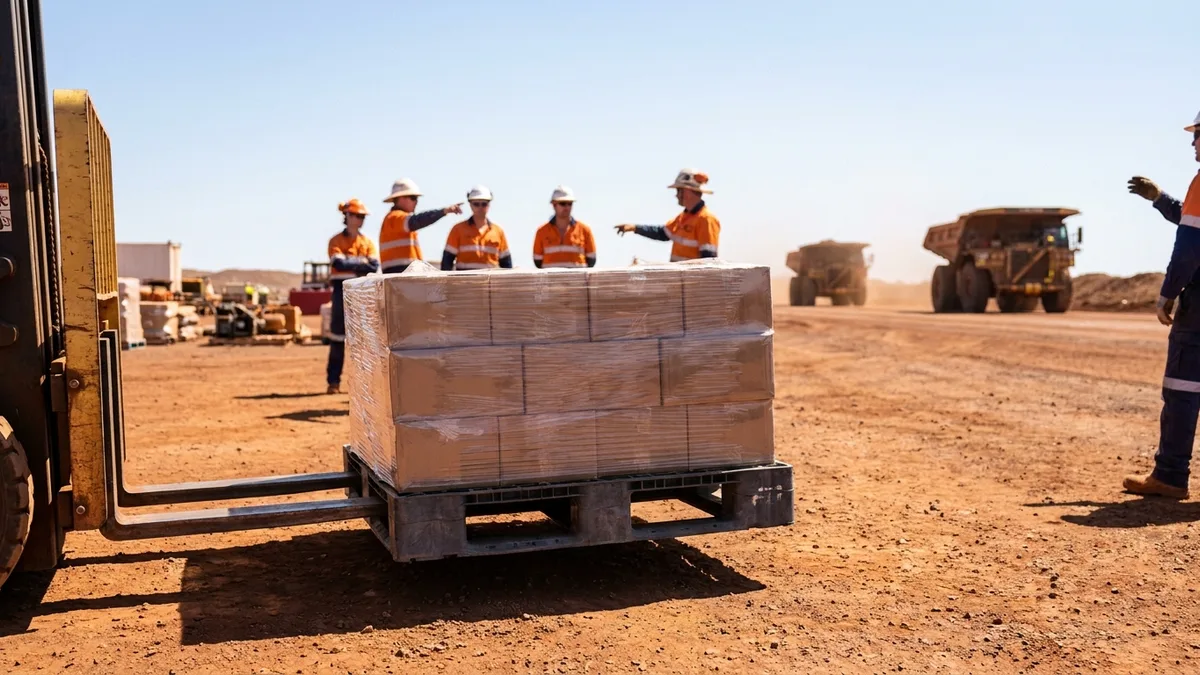
A steel-fabrication business in Whyalla, South Australia, exporting finished components to the USA and other markets. Two things drove their pallet choice. First, biosecurity: timber packaging shipped internationally must be heat-treated and certified under ISPM-15, and timber gets flagged, inspected and sometimes held at the destination border — delays and costs an exporter can do without. Second, freight economics: the lighter the pallet, the more of the chargeable payload goes to saleable product rather than dead tare, and a pallet that nests stores efficiently between shipping runs.
The problem with the old handling
Exporting on timber pallets meant living with timber-import restrictions. Every consignment needed ISPM-15 heat treatment and certification, and timber was a recurring trigger for biosecurity flags and re-inspection at the receiving end — each one a potential hold-up and an extra cost line. Timber pallets are also heavy and do not nest, so they ate into payload and took up full-footprint storage in the yard between runs.
Why this product
They moved to the lightweight nestable ISO export pallet, which the catalogue describes specifically as an export pallet for shipping to NZ, the USA and Europe. The specifications fit the export brief precisely: 1200×1000×138 mm on the ISO footprint, built in PC and HDPE, weighing just 9 kg, rated to 3,200 kg static and 800 kg dynamic, on a 9-feet base, and both nestable and stackable. The decisive advantage is that, as a plastic pallet, it is exempt from ISPM-15 — no heat treatment, no fumigation certificate, no timber-import restriction — so consignments clear biosecurity as plastic without the treatment paperwork that flags timber. The low 9 kg tare protects chargeable payload on export freight, and the nestable design means empties store compactly and cycle efficiently between runs rather than standing around at full footprint.
How the rollout went
The pallets went under export consignments and the biosecurity friction that came with timber dropped away — as a plastic pallet exempt from ISPM-15, shipments no longer needed heat treatment or certification, and the recurring risk of a timber flag at the destination border was removed. The 3,200 kg static rating handled stacked storage of the fabricated components, and between runs the pallets nested down to store compactly in the yard instead of consuming full-footprint space.
The estimated result
The exporter estimates that skipping heat treatment, certification and re-inspection saved an estimated meaningful sum per consignment — a figure framed explicitly as an estimate, since actual treatment and inspection costs vary by lane and provider, and not a price quote. Beyond the per-consignment saving, the reusable plastic deck is estimated to have replaced an estimated 5 or more one-trip timber pallets over its service life, steadying what had been a lumpy export-packing budget, while the low tare protected payload and the nesting kept storage and any empty movement compact. The combination — ISPM-15 exemption that clears biosecurity cleanly, a light deck that preserves freight payload, and a reusable that displaces a stack of one-trip timber — is exactly what an exporter shipping fabricated product overseas needs, and it removed a standing source of border delay from their shipping operation.