
A Hunter Valley coal-services warehouse beats termites with a medium-duty plastic ISO pallet
A Hunter Valley coal-services warehouse.

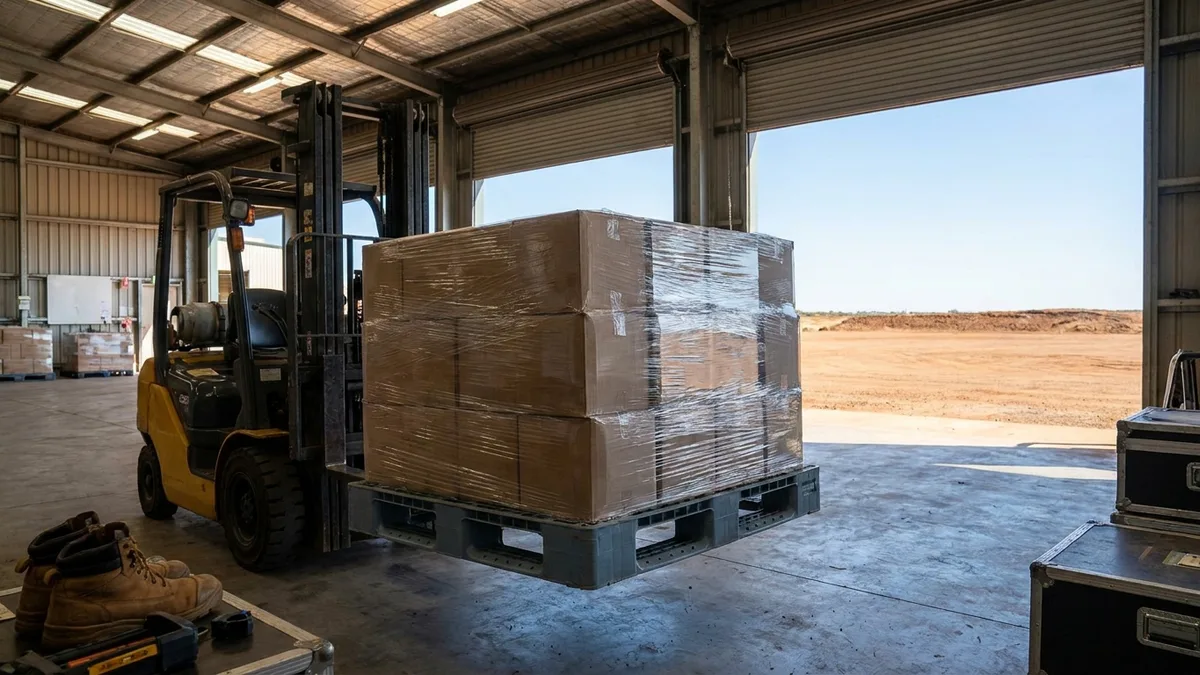
The operator
This story follows a coal-services warehouse in the Hunter Valley of New South Wales — a support operation holding parts and consumables for the surrounding mining industry. The shed is humid and, like much of the region, termite-prone, which makes timber a liability for anything that has to sit in storage for months at a time.
The problem with the old handling
The warehouse stored stock on timber pallets, and the combination of wet-season humidity and active termites was steadily destroying them. Timber pallets in a damp shed rot, warp and get eaten, which means a constant replacement cost and, worse, the risk of a pallet failing under load and creating a safety incident. The operation wanted a medium-duty pallet that carried a strong stacked load for general floor storage, shrugged off rot and insects, and could have damaged feet repaired rather than the whole unit scrapped.
Why this product
They moved to the BPB-320 Medium Duty Plastic Pallet: an ISO-standard (1200 × 1000 mm) pallet weighing 12.5 kg, moulded from HDPE, rated to 6400 kg static and 1600 kg dynamic, with 4-way entry and snap-on skids. The strong 6400 kg static rating suited dense floor stacking, and the sealed HDPE construction simply ignores the termites and humidity that had been destroying the timber — no rot, no insect damage, no warping. The snap-on skids were the other draw: when a foot is damaged in service, it is replaced individually rather than condemning the entire pallet.
As a stocked ISO pallet it was straightforward to introduce in the quantities the warehouse needed, sized to the racking and handling already in place.
It is worth being clear about how the BPB-320 is best used. It is a medium-duty pallet built for strong floor stacking and forklift movement — its 6400 kg static and 1600 kg dynamic ratings speak to that — rather than a dedicated high-rack pallet with a published racking figure. In this warehouse the role was general stacked storage of parts and consumables in a damp, insect-prone shed, which is squarely what the pallet is designed for. The snap-on skid system fits that use too: in a busy parts store feet take knocks, and being able to click in a replacement skid keeps an otherwise sound pallet in service instead of retiring it over one damaged foot.
How the rollout went
On the standard ISO footprint, the BPB-320 dropped into the warehouse's existing storage and forklift patterns without change. The shift was as much about what stopped happening as what started: the annual cull of rotted and termite-damaged timber pallets came off the budget, and the team began swapping individual skids instead of scrapping whole units.
The estimated result
The value is durability in a hostile environment. By being immune to the termites and rot that plagued the timber, and by allowing field replacement of damaged feet rather than whole-unit disposal, we estimate the pallet extended useful service life by an estimated 3–4 years per unit and removed the recurring annual timber replacement from the warehouse's costs. The strong static rating kept dense floor stacking safe. These are planning estimates based on the pallet's HDPE construction and swappable-skid design rather than a quoted figure — but for a humid, termite-prone mining-services shed, a sealed plastic pallet with replaceable feet turns a recurring write-off into a long-life asset.