
A Riverina onion packer added returnable crates affordably with refurbished vented units
A Riverina onion packer moving to returnable retail-ready packs on a tight margin.

Wanting returnables without the new-unit price
An onion packer in the Riverina wanted to move its retail-ready packs onto returnable plastic crates, but the margin on packed onions is thin and the capital cost of a full fleet of brand-new crates was hard to justify before the format had proved itself in their own operation. At the same time, the status quo was costing them in a different currency: onions were being loose-bagged and double-handled, re-bagged and re-stacked, with all the labour and product knocking-about that implies. They needed a food-grade, stackable returnable that would let them retire the double-handling, but they needed it at a price that did not bet the season on an unproven change.
Why the 38L used vented crate
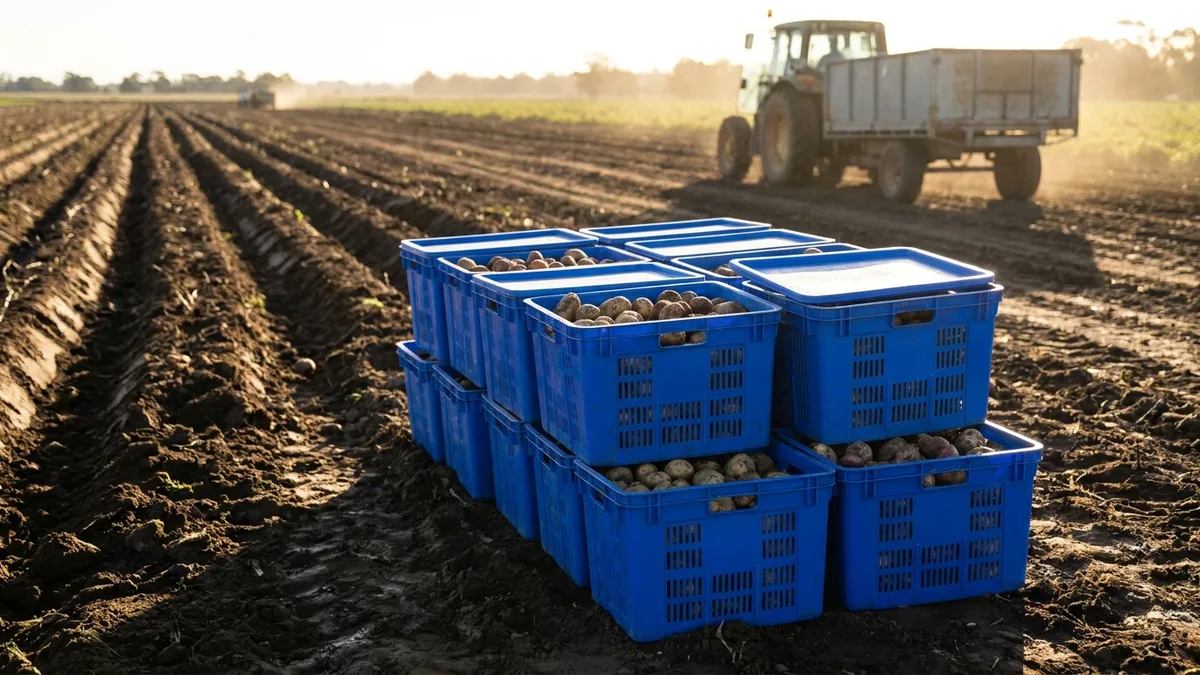
The packer brought in the Vented Plastic Crate (BPB-6418U) in used condition. Buying refurbished was the unlock: a second-hand vented crate delivers a food-grade, stackable unit at a fraction of the new-unit price, which made the move to returnables affordable enough to commit to. The crate itself suited the crop. At 600x400x180 mm with a 38 L capacity on the standard returnable-packaging footprint, the vented HDPE walls keep cured onions dry and ventilated in the coolroom rather than sweating in a sealed box, and the crates stack full on a pallet so product travels and stores in a tidy, stable column instead of loose bags. The standard footprint also meant the crates dropped straight into the retail returnable systems the packer's customers were already running.
Rollout on the pack line
The crates went in on the retail-ready lines, where graded onions were packed straight into stacked vented units in place of the old loose-bag-and-restack routine. Because the crates are a known standard size, they palletised cleanly and integrated with the customers' returnable loops without special handling. Being refurbished rather than new, the initial outlay was modest enough that the packer could roll the format out at scale and judge it on real throughput rather than a small trial.
The estimated result
Two estimates matter here. On capital, buying used kept the changeover cost low enough that we estimate the units paid back within an estimated 1-2 seasons against the alternative of continuing to buy single-trip cartons and bags. On labour, replacing loose-bagged double-handling with stack-and-go crates is estimated to have saved an estimated 1-2 labour hours per pack day that had previously gone into re-bagging and re-stacking, time that, across a season, adds up to real money on a thin-margin crop. The vented design also keeps cured onions in better condition through the coolroom than a sealed pack would, supporting quality on the way to retail. These are planning estimates rather than a guaranteed result, and the realised payback depends on pack volumes, how long the refurbished crates last in service and the labour rate behind the saved hours. For a packer who wanted the benefits of returnables without the new-crate price tag, the used route turned a hard capital decision into an easy one.