
A Contract-Pharma Site Cuts Tare and Treatment on Its Europe Export Lane
A contract-manufacturing pharmaceutical site exporting to Europe.

The operation
This is a contract-manufacturing pharmaceutical site shipping finished product to Europe. Their export lane is cost-sensitive on two fronts at once: chargeable freight weight, where every kilo of pallet tare is a kilo of payload they can't bill, and biosecurity, where timber packaging triggers treatment and certification on the way out.
The problem with the old handling
Timber export pallets hurt them twice. On weight, a heavy timber deck ate into chargeable payload on a lane where freight is expensive. On compliance, every timber consignment needed ISPM-15 heat treatment and a certificate before it could ship, adding both a cost per consignment and roughly a day of lead time to raise and clear the paperwork. They wanted a light Euro pallet that a forklift could still enter cleanly, but with minimal tare and no timber treatment burden.
Why this pallet
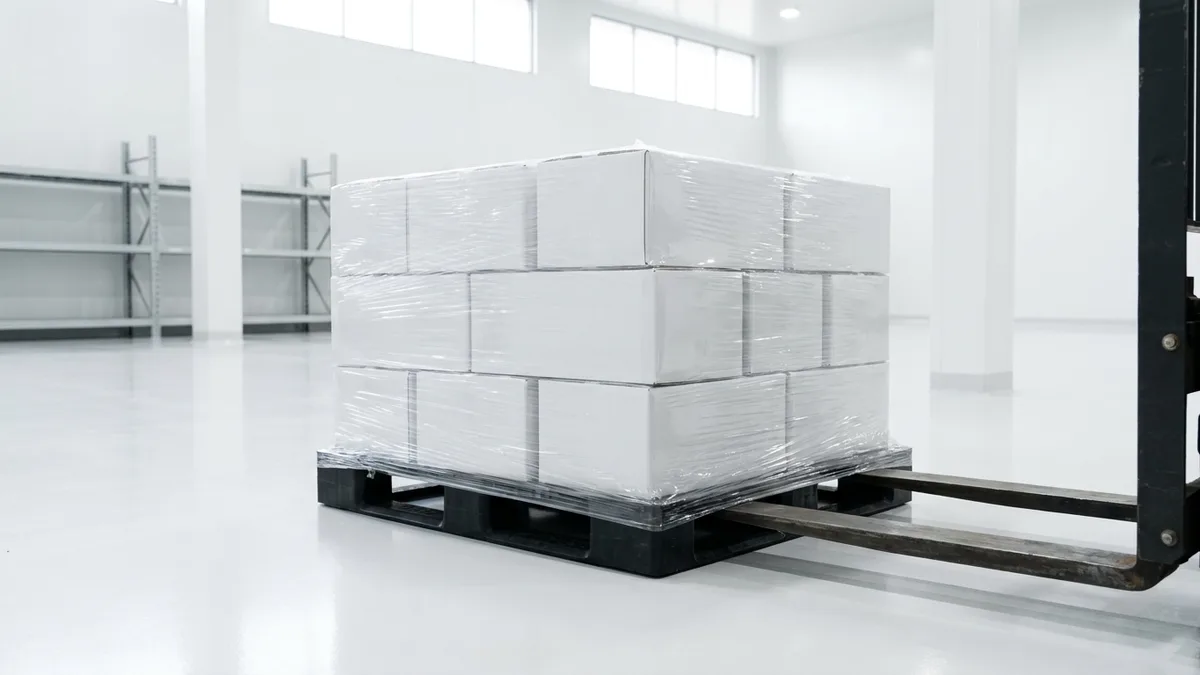
They chose the BPB-815, a very light Euro-standard export pallet with snap-on skids. It is a 1200 x 800 mm pallet at 140 mm tall, moulded from HDPE, weighing just 5.9 kg, rated to 2,000 kg static and 1,000 kg dynamic on a 3-skid base. Two features made it fit. The snap-on skids let the forklift take the pallet from any side cleanly despite the low profile, so handling didn't suffer for the light build. And being plastic, the pallet is exempt from ISPM-15, no heat treatment, no fumigation, no certificate.
The 5.9 kg tare was the differentiator on a chargeable-weight lane: a featherweight deck preserves payload that a heavy timber pallet would consume. The snap-on skids also mean a damaged foot can be replaced rather than scrapping the whole pallet, which lowers the long-run cost of running the fleet.
The rollout
With a low minimum order around 40 units, the site adopted the pallet on its Europe lane in a controlled way. They switched the outbound documentation to drop the treatment-and-certify step, confirmed the snap-on skids gave clean forklift entry under load, and set up skid replacement so a knocked-off foot was a cheap swap rather than a write-off.
The result, estimated
The compliance saving is the clearest line, framed as an estimate. Avoiding ISPM-15 heat treatment and certification trimmed an estimated meaningful sum per consignment in treatment cost and removed roughly a day of lead time from each shipment, and on a regular export lane that recurs on every movement. We frame the dollar figure explicitly as an estimate: actual treatment costs vary by provider and consignment, and it is a saving on an avoided cost, not a price quote.
The weight saving compounds it. At 5.9 kg the pallet preserves chargeable payload that a heavier timber deck would have eaten, which on an expensive Europe lane adds up across repeated shipments. And the swappable skids lower the running cost further, damaged feet are replaced individually instead of scrapping the whole pallet. The exact numbers move with the lane and the freight mode, but the direction is consistent: lighter tare, no treatment paperwork, and a longer-lived pallet.