
How a bottled-beverage co-packer ended skid-loss failures with a one-piece Euro plastic pallet
A bottled-beverage co-packer (metro AU).

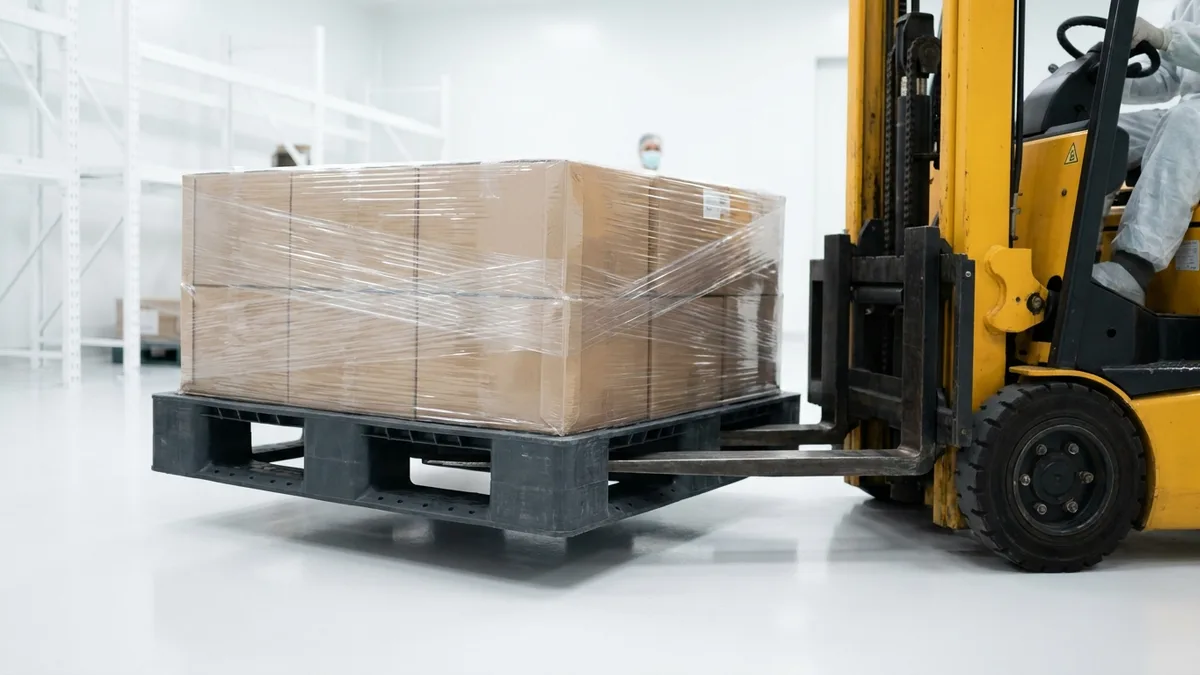
The operator
This is a contract bottling and beverage co-packer running a fast-moving despatch dock, palletising finished bottled product for supermarket and pharmacy-channel customers. On a dock that turns pallets quickly and handles them roughly with forklifts and pallet jacks, the co-packer kept losing time and money to pallets that came apart.
The problem with the previous setup
The operation had run a mix of timber and modular plastic pallets with separate snap-on skids. Both shared a weakness: components that work loose. Timber boards split and shed stringers and nails, and modular pallets lose skids under rough forklift entry, leaving units that fail mid-handling and have to be made safe or scrapped. With bottled product, a pallet that lets go on the dock is a spillage and a safety hazard as well as a delay, and the loose-component failures made the replacement budget unpredictable.
Why this product
They switched to the single-piece medium-duty Euro plastic pallet (1200×800×145 mm, HDPE, 12.5 kg, 4,000 kg static, 1,000 kg dynamic, on a moulded 3-skid base). The defining feature is exactly that it is one piece — there is nothing to snap off, work loose or shed under rough handling, so it survives the knocks a busy despatch dock dishes out. The 1,000 kg dynamic rating comfortably covers a palletised load of bottled product on the move, and the seamless moulded deck wipes clean after the inevitable spillage rather than soaking it up like timber.
For a high-rotation beverage dock, eliminating the failure mode that loose skids and split timber introduced was the whole point: a pallet that stays in one piece keeps product on the deck and keeps the dock moving. The Euro 1200×800 footprint matched the customers’ receiving systems and racking, so the change improved durability without disrupting the formats the co-packer already shipped on, and at 12.5 kg the pallet stayed easy to handle on a fast manual-and-forklift dock.
How the rollout went
The co-packer rolled the one-piece pallets onto its highest-throughput despatch lines first, where component-loss failures had been most disruptive. Forklift crews could enter and move the units hard without the skid-loss that had plagued the modular pallets, the seamless deck cleaned up after spills, and the make-safe interventions that broken timber and lost skids had triggered simply stopped occurring. The 1,000 kg dynamic rating comfortably handled a full pallet of bottled product on the move, so there was no temptation to over-load beyond the deck’s rating. From there the format spread across the despatch fleet.
The result (estimated)
Removing loose components removed the dominant failure mode. We estimate the one-piece design extended average service life by an estimated 2–4 years per unit versus the modular and timber pallets it replaced, and just as importantly it steadied a replacement budget that the unpredictable skid-loss and splitting had made lumpy. The wipe-clean deck also cut the spillage clean-up and the contamination risk that a porous timber surface carried on a beverage line, and fewer mid-handling pallet failures meant fewer spillage and safety incidents on a dock moving glass and liquid. These are estimates dependent on handling intensity, load profile and dock conditions, and are provided as estimates rather than a price quote.