
A cold-chain grocery DC stops freezer pallet breakages with the highest-rated Euro plastic pallet
A cold-chain grocery distribution centre running freezer racking.

Timber stringers snapping in the freezer and creating fall hazards
A cold-chain grocery distribution centre was cracking timber Euro pallets in its freezer racking. Sub-zero temperatures embrittle timber, and stringers were snapping under load high in the beams, not just a product-damage problem but a genuine fall hazard, triggering make-safe interventions and write-offs of damaged stock. The DC needed a Euro-footprint pallet that could go into freezer beam racking and stay intact, with a racking rating high enough to keep the engineering compliant under load.
Why the 850 kg-rated Euro plastic pallet was the right call
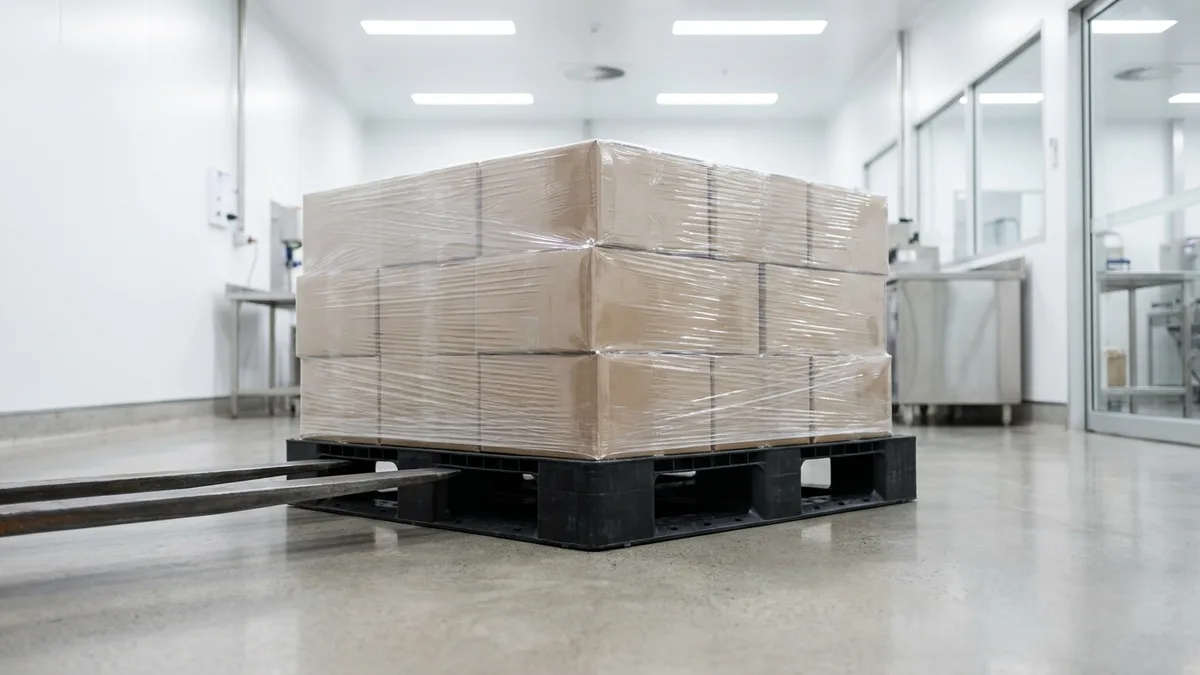
The DC standardised on a heavy-duty 1200 x 800 mm HDPE Euro pallet weighing 18 kg, rated to 10,000 kg static, 3,500 kg dynamic, and, the decisive figure, an 850 kg racking rating, the highest rack figure in the Euro range. The discipline that made it work was racking to the published 850 kg number rather than the eye-catching static headline, which kept the beams within AS 4084 under real freezer loads. The HDPE body shrugs off the cold embrittlement that was snapping timber stringers, so pallets that used to fail in the beams simply stopped failing. As a sealed plastic deck it also avoids the moisture and contamination issues timber carries in a food cold chain.
The weight and consistency helped on the floor as well. At 18 kg the pallet is manageable for the manual repositioning that happens around a busy grocery DC, and because every pallet is dimensionally identical, unlike timber, which warps, swells and varies board to board, they seat predictably in the beams and run cleanly through any automation. With a 10,000 kg static and 3,500 kg dynamic rating the deck is in no danger from the loads themselves; the engineering constraint that mattered was always the 850 kg racking figure, and designing freezer storage around that number is what kept the whole system compliant rather than just strong.
The rollout
The DC replaced the worst-affected freezer racking lines first, loading strictly to the 850 kg racking figure so the beam compliance held. The breakage problem fell away quickly, the plastic pallets took the cold and the load without the stringer failures that timber suffered, and with the breakages went the make-safe call-outs and the damaged-stock write-offs that followed them. Because the footprint was unchanged, the rest of the handling system was untouched. With the result clear, the DC extended the plastic pallets across its freezer racking.
An estimated result, clearly hedged
The figures here are estimates, not guaranteed results, and they depend on load profiles, racking configuration and handling discipline, and the 850 kg racking rating is the limit to design to, not the static headline. With that caveat, we estimate cold-store pallet breakages dropped by an estimated 70% after the switch, with a matching fall in make-safe interventions and in damaged-stock write-offs tied to failed pallets. The sealed HDPE deck also removes the timber moisture and hygiene problems a food cold chain dislikes. We are not quoting an absolute price or a promised return on investment; a DC can test the case against its own freezer breakage rate, its safety-intervention log and its write-off figures, and the conservative read is that sharply fewer breakages plus fewer fall hazards plus lower write-offs justify the changeover, provided loads are always kept to the rated 850 kg racking figure for AS 4084 compliance.