
A Pilbara workshop keeps point-heavy machined parts stable on a wide-foot ISO plastic pallet
A Pilbara heavy-equipment workshop storing machined parts.

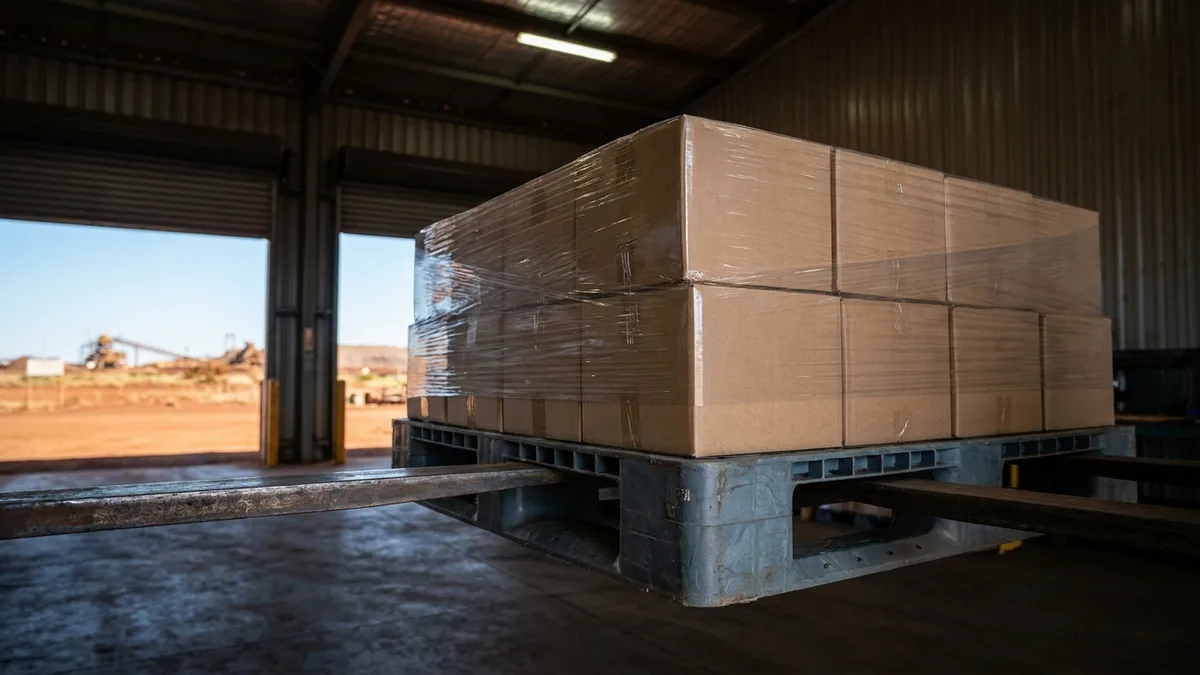
Uneven, point-heavy loads and timber that kept failing in the rack
A heavy-equipment workshop in the Pilbara was racking uneven, point-heavy machined parts on timber pallets that did two things badly: they deflected and failed under concentrated point loads, and in a termite-active, high-heat region they rotted and were eaten, ending up condemned and binned. The combination meant rack-deflection incidents on the floor and a steady replacement spend on timber that never lasted. The workshop needed a rackable pallet that stayed stable under awkward, concentrated loads and survived the environment.
Why the wide-foot heavy-duty ISO pallet suited point loads
The workshop standardised on a heavy-duty 1200 x 1000 mm ISO plastic pallet in HDPE, weighing 17.15 kg and rated to 4,000 kg static, 2,000 kg dynamic, and 1,000 kg racking, built on three skids with an extra-wide central foot. Two specs did the work. The strong 2,000 kg dynamic rating handles the heavy parts on the forks, and racking strictly to the published 1,000 kg figure under AS 4084 kept the beams compliant under dense loads. The extra-wide central foot is the detail that mattered for their point-heavy parts: it improves beam contact and spreads concentrated loads better than a standard foot, which is exactly what was causing the timber to deflect and fail. As sealed HDPE, the pallet ignores the termites and humidity that were destroying the timber.
The three-skid base earned its place too. Open skids let the forklift and pallet jack engage cleanly from the working sides, and they shed the dust and fines that accumulate in a workshop far better than a closed timber deck that traps grit. Machined parts often arrive with a film of coolant or swarf, and a sealed HDPE surface wipes down rather than soaking it up, so the pallets stay serviceable instead of becoming grimy write-offs. For a remote Pilbara site where every replacement has to be freighted in, a deck that simply does not rot, splinter or get eaten removes a recurring logistics nuisance as much as a recurring cost.
The rollout
The workshop deployed the wide-foot ISO pallets on the racking carrying the most awkward, concentrated loads, sizing the storage to the 1,000 kg racking figure so the beam compliance held. The deflection incidents that had been a recurring hazard fell away as the wide central foot and the rated deck took the point loads cleanly. In parallel, the termite write-offs stopped, the plastic simply was not food for the insects that had been eating the timber. With the result proven, the workshop extended the pallets across its parts storage.
An estimated result, clearly hedged
The figures here are estimates rather than guaranteed outcomes, and they depend on load geometry, racking setup and handling discipline, and the 1,000 kg racking rating, not the static headline, is the number to design to. With that caveat, we estimate that sized and racked correctly the pallet cut rack-deflection incidents to near zero on the point-heavy loads that had been failing timber, removing a real safety exposure. In a termite-active region the sealed HDPE is estimated to have outlasted several timber pallets per position over its life, ending the annual replacement cull from the budget. We are not quoting an absolute price or a promised return; a workshop can test the case against its own deflection-incident log and its timber-replacement spend, and the conservative read is that near-zero deflection plus the end of termite write-offs justifies the changeover comfortably over the asset's life.