
A Regional Supermarket Chain Swaps Sagging Cartons for Deep Recycled Totes
A regional supermarket chain's back-of-house storage operation.

The operation
This is a regional supermarket chain running ambient back-of-house storage across multiple stores, the stockroom layer between the DC and the shelf, where bulky slow-moving lines wait to be replenished. The chain has a stated sustainability target on packaging waste, and back-of-house cardboard had become both an operational headache and a reporting problem.
The problem with the old handling
Deep cardboard cartons were the weak link. Stacked four-high in a stockroom, bottom boxes sagged and slumped under the weight above, which made the stack unstable and damaged stock. The cartons were single-use, so every one was a purchase and then a waste-disposal cost, counting directly against the chain's packaging-waste reduction reporting. They needed a storage unit that stayed rigid under a deep stack, came back into use cycle after cycle, and helped rather than hurt the sustainability numbers.
Why this crate
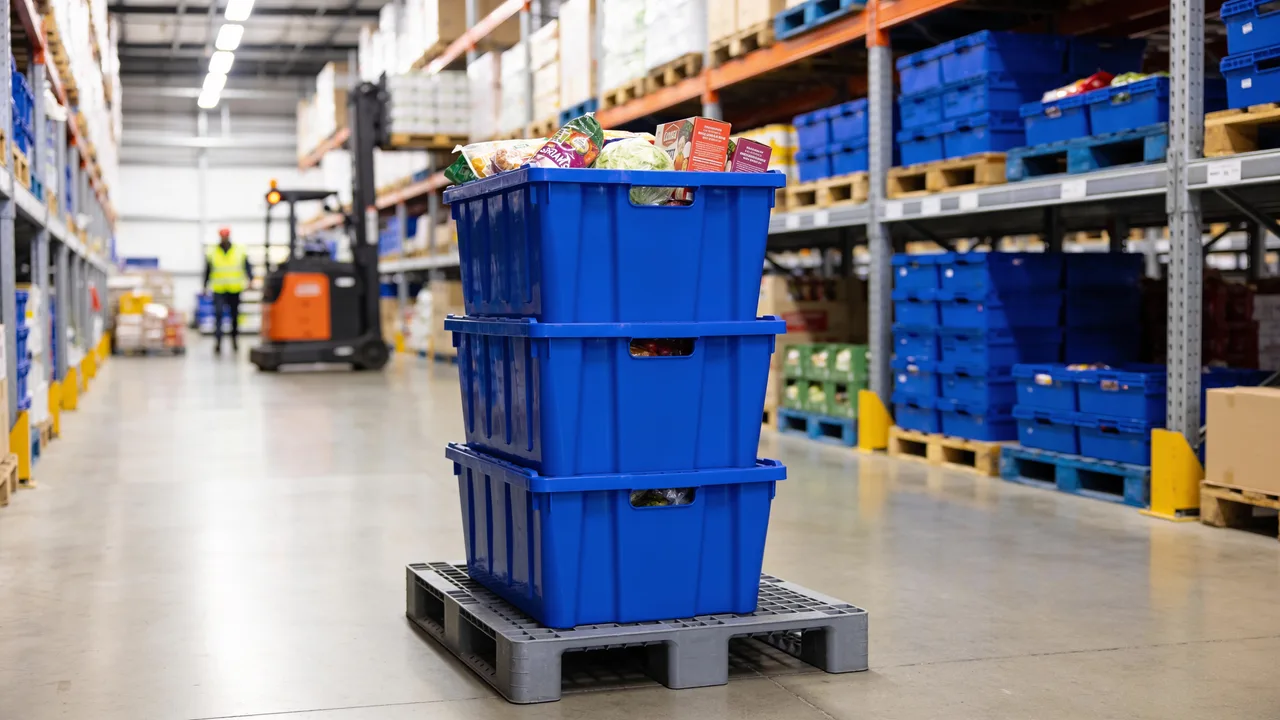
They standardised on the BPB-AP15R, a 68-litre stack-and-nest solid crate moulded from recycled plastic. It is a 645 x 413 x 397 mm unit in polypropylene, deep enough for bulky lines, with both stacking and nesting designed in. Two attributes made it fit. First, it stacks rigidly when full, the solid walls carry the load so a four-high stack stays square and stable, where cardboard sagged. Second, it nests empty, so when the crates aren't in use they collapse the footprint down instead of occupying full volume in the stockroom.
The recycled-plastic construction was the deciding factor for this buyer specifically: it supports the chain's packaging-waste reduction reporting and environmental messaging, turning the storage layer from a waste line into part of the sustainability story. The crate's deep, washable profile also handles the bulky lines the cartons used to sag under.
The rollout
With a minimum order around 60 units, the chain rolled the crates into back-of-house storage store by store, starting with the deep slow-moving lines where carton sag was worst. They confirmed the four-high full stack held square, set the empties to nest in the stockroom between replenishment cycles, and folded the crate count into their packaging-waste reporting so the displaced cardboard showed up as a reduction.
The result, estimated
The cost story is a payback, framed as an estimate. By replacing single-use deep cartons with a reusable recycled crate, the chain stops buying and disposing of boxes for those lines, and we estimate the crates pay back against ongoing carton spend within roughly 18 months, after which they keep saving every cycle while outlasting cardboard by many rotations.
The space story is the second effect. Nesting the empties reclaims an estimated 55% of the storage footprint the equivalent rigid boxes had occupied between uses, meaningful in a stockroom where floor space is always short. And the reporting story is the one that mattered most to this buyer: the recycled content and the elimination of single-use cardboard feed directly into the chain's packaging-waste reduction targets. As always the percentages depend on how the stockrooms are run and how often crates cycle, but the combination, stable deep stacks, reclaimed floor space, and a sustainability line that finally moves the right way, is exactly what the chain was after.