
How a Hunter Valley winery managed cellar and coolroom space with a stack-and-nest solid tote
A Hunter Valley winery with a chilled-food side-line.

The operator
This is a Hunter Valley winery that runs a busy cellar door and bottling line alongside a small chilled-food and produce side-line. Space is their constant constraint: the cellar, the bottling area and the coolroom are all working rooms, and anything stored in them competes for floor that could be doing something more valuable. They came to us about the totes they used for finished-goods picking, bottling-line components and chilled transfers, because those containers were costing them space whether they were full or empty.
The problem with the old handling
They were using disposable cartons across these lines. Cardboard fails a winery on two fronts. In a damp cellar and a wet bottling environment, cartons sag, weaken and fail when stacked, so loads became unstable and product got damaged. And empty cartons do not collapse usefully, they pile up and occupy back-of-house space between runs, or get thrown out and re-bought, which is a recurring cost and a steady stream of waste to dispose of. For an operation juggling cellar, bottling and coolroom space, the cartons were a poor custodian of both product and floor area.
Why this product
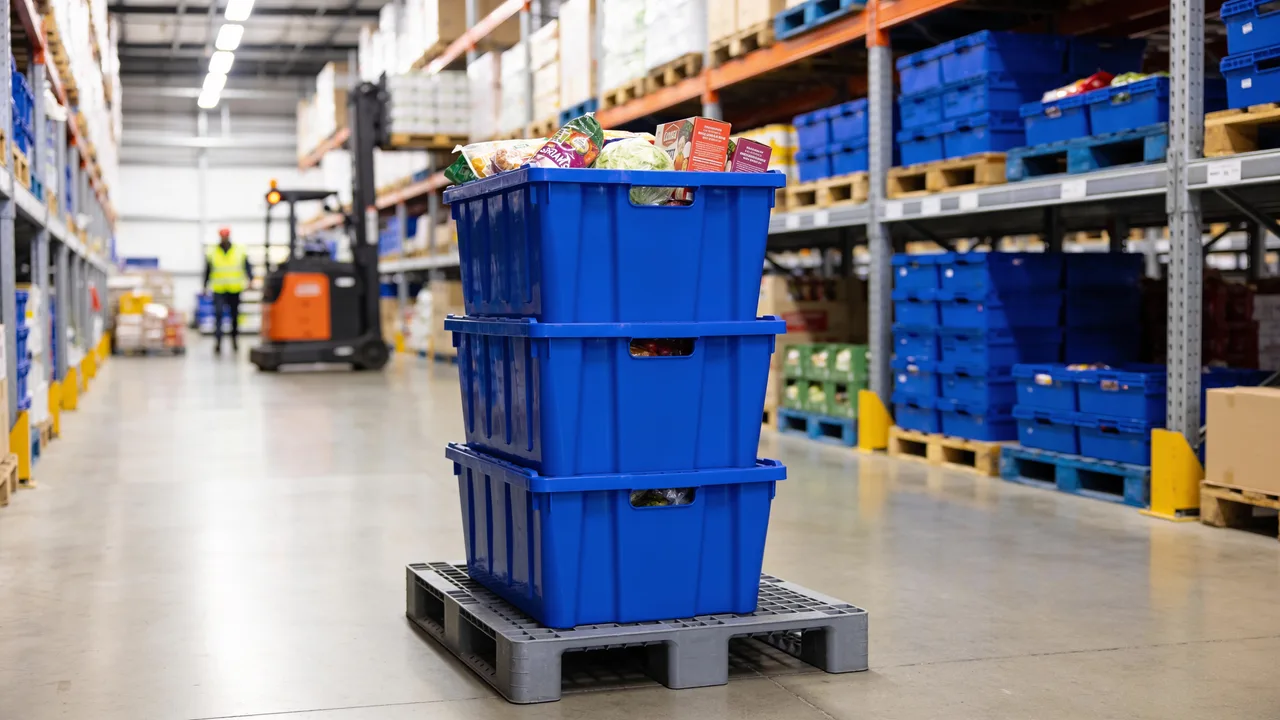
They adopted the 32 L Stack & Nest Solid Plastic Crate (BPB-AP7): a 645 x 413 x 210 mm tote moulded from PP and HDPE, designed to stack rigidly when full and nest down inside itself when empty. That stack-and-nest geometry is the whole point. Full, the totes stack securely for stable storage and transport of bottling components and chilled goods; empty, they nest into one another and give back a large share of the floor they occupied erected. The washable food-grade surface suits a winery and a chilled-food line far better than absorbent cardboard, and the 32 L mid-depth body is a practical size for picking and transfers. The modest 120-unit MOQ let them equip the cellar, bottling and coolroom lines without over-committing.
The rollout
They brought the totes in across the busy lines, finished-goods picking at the cellar door, components on the bottling line, and chilled transfers through the coolroom. Full, they stacked cleanly and stably where cartons had sagged; empty, the crew nested them down and reclaimed the back-of-house space the cardboard had been hogging. The washable surface simplified keeping things clean in a food-and-beverage environment, and the totes simply did not degrade in the damp the way the cartons had.
The estimated result
We frame these as estimates, because they depend on rotation and how religiously empties are nested. Replacing disposable cartons with durable reusables across the busy lines, we estimate the totes pay back against ongoing carton spend within roughly 12-18 months, and they last many cycles longer than cardboard in a damp cellar. On space, nesting the empties recovers an estimated 55% of the storage footprint the equivalent rigid boxes consumed between bottling and picking runs, real floor handed back in rooms where space is the binding constraint. Add the cut in carton waste and the damaged-stock the sagging boxes used to cause, and the stack-and-nest tote earns its place on both the cost and the space ledger.