
How a Melbourne 3PL turned recurring back-haul and storage cost into a one-off folding-container fleet
A Melbourne (VIC) third-party logistics operator.

The operator
This is a Melbourne-based third-party logistics operator running shared-user warehousing and inter-DC shuttle runs for a spread of grocery, beverage and light-industrial clients, all of them on the Euro (1200×800) footprint. Bulk product moved between sites in rigid Euro bulk boxes, and the boxes were the problem: full or empty, they took the same cube, so the operator was paying twice — once to back-haul air, and again to store erected boxes between client runs.
The problem with the previous setup
Rigid Euro bulk boxes do not collapse. An empty one returning from a client DC occupies a full pallet position on the truck, and a spare one sitting in the warehouse between jobs occupies a full position on the floor. Across a fleet large enough to service multiple clients, that idle and return-leg volume was eating trailer space that should have been carrying revenue freight, and warehouse floor that should have been racked stock. The operator wanted the strength and footprint of a rigid Euro box without paying to move and store fresh air.
Why this product
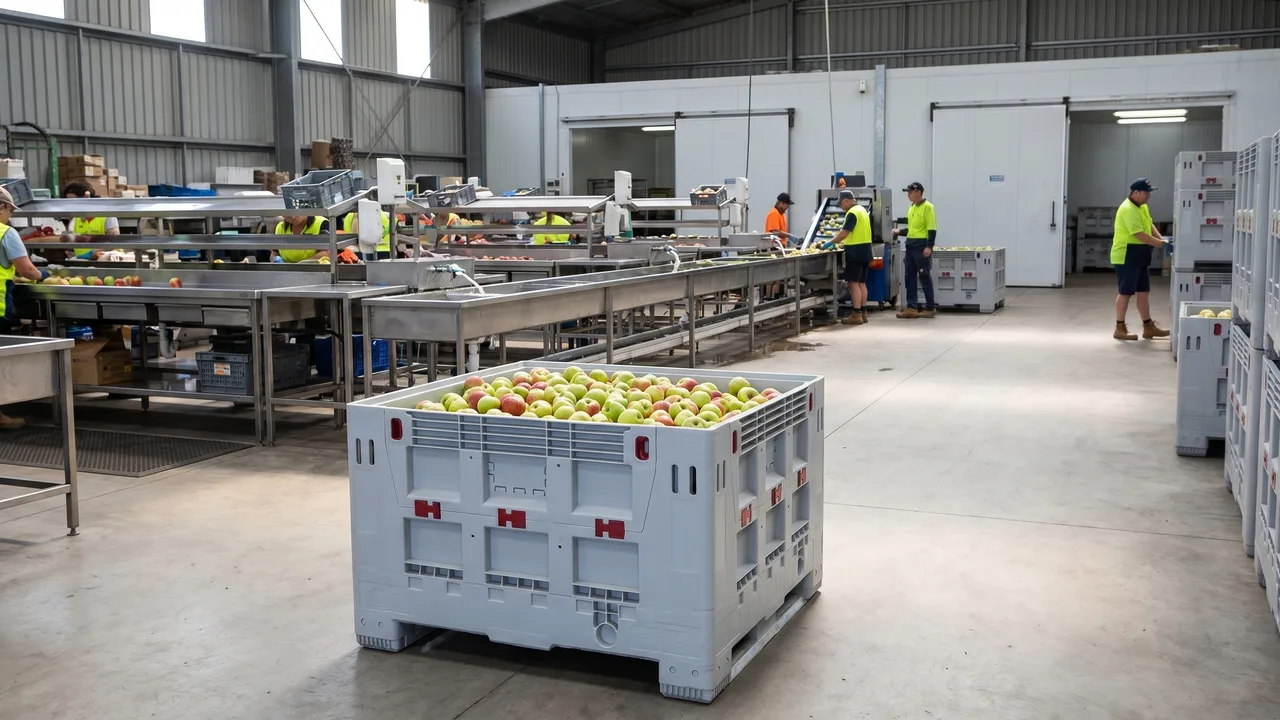
They switched to the folding solid Euro bulk container (1200×800×805 mm, 565 L, HDPE, 7,000 kg static, 650 kg dynamic, 4-way entry, 41 kg). Erected, the 7,000 kg static rating handles dense palletised stock and stacks safely in the DC; the 4-way entry suits fast forklift work on a busy cross-dock. The decisive spec is the 293 mm folded height: collapsed, roughly three units occupy the footprint of one erected box. That converts the recurring cost of back-hauling and storing rigid boxes into a one-off purchase of a reusable folding fleet that flat-packs the moment it is empty.
The solid HDPE walls also wipe clean after spillage, which matters across mixed grocery and beverage lines where a leak in one consignment can’t be allowed to contaminate the next.
How the rollout went
The 3PL introduced the folding containers on its highest-frequency inter-DC lane first, where empties cycled back daily and the back-haul waste was most visible. Crews erected boxes at the loading end and folded them flat on return, and the change to the shuttle routine was minor — the units lock up square quickly and drop flat just as fast. Once the lane proved out, the fleet was expanded to cover the slower client runs and to replace the spare rigid boxes that had been clogging the marshalling area.
The result (estimated)
Folding to 293 mm lets about three collapsed units travel or store in the space of one erected box, so we estimate the change cut combined empty-return and idle-storage volume by an estimated 65% on the lanes where it was deployed. In practice that means more revenue pallets per back-haul trailer and reclaimed floor in the marshalling area, rather than a single line-item refund. Because the containers are reusable HDPE rated to 7,000 kg static and last many years, the operator turned a recurring back-haul-and-warehousing expense into a one-off fleet outlay that keeps returning value on every cycle, and the wipe-clean deck removed the cross-contamination risk that loose, leaking rigid boxes had carried between clients. All figures are estimates that depend on lane mix, fill rates and how empties are scheduled — they are not a price quote.