
How a food-distribution operator upgraded a whole Euro bin fleet to covered storage for a fraction of replacement cost
A Victorian food-distribution operator running a Euro-pallet DC.

The operator
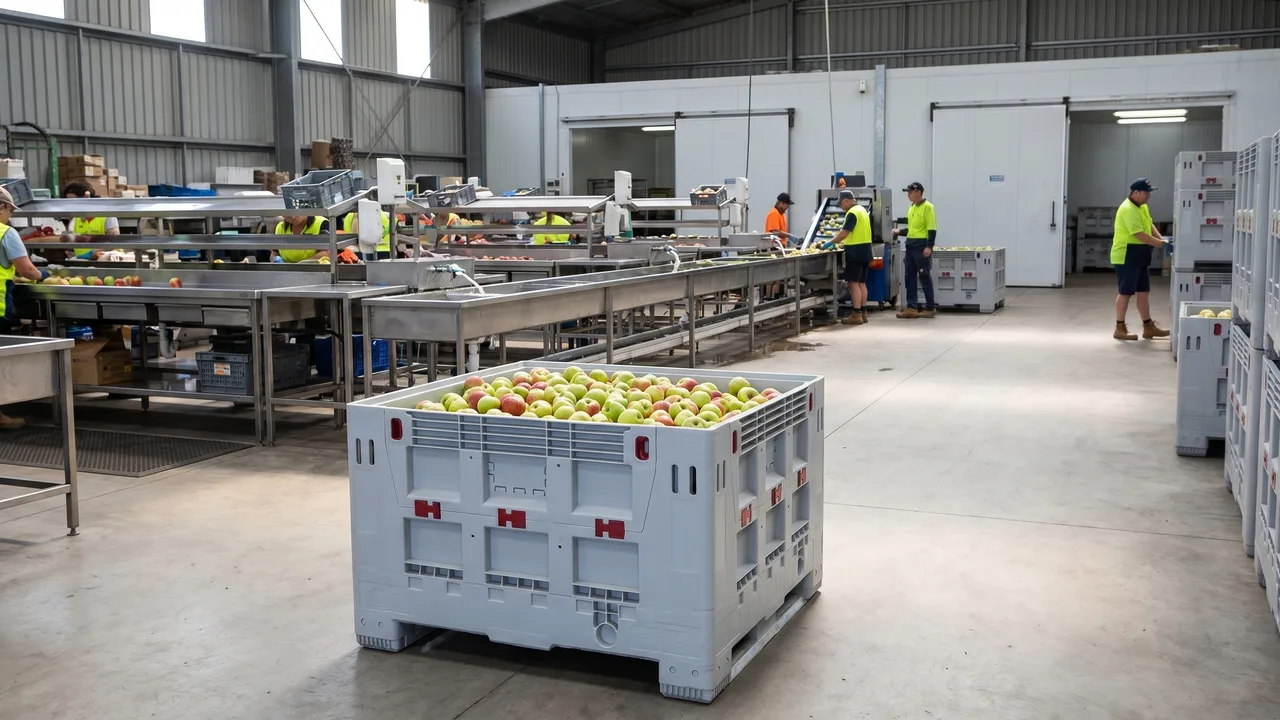
This is a food-distribution business running a Euro-footprint distribution centre in regional Victoria, handling ambient and chilled lines for grocery and food-service customers. They already ran a sizeable fleet of folding Euro (1200 x 800 mm) bulk containers for bulk put-away and inter-site transfer. The bins themselves were sound and had years of service left in them, but they were open-topped, and that was starting to cause problems in the parts of the operation where stock had to stay clean and stack safely.
The problem with the old handling
Open bulk bins are fine until you need to hold product for any length of time or stack units on top of each other. In their coolroom and dust-prone ambient zones, the top layer of stored goods in an uncovered bin was exposed, picking up dust, drips from the level above, and the occasional contamination flag at audit. Stacking open bins also risked the load of the upper bin pressing onto the product in the lower one. The obvious fix was lidded containers, but replacing an entire serviceable fleet with brand-new covered units would have been a large and frankly wasteful capital spend on bins that were otherwise perfectly good.
Why this product
Rather than replace the fleet, they retro-fitted it. The Lid for Euro Bulk Container (BPB-C1208SL) is a drop-on cover sized to the Euro 1200 x 800 mm footprint, moulded from HDPE, just 40 mm deep and 7 kg, light enough to lift on and off one-handed all shift. It simply caps their existing folding Euro bins, converting an open bin into a covered one. There is nothing to assemble and no change to the underlying container or how it is handled; the lid does one job and does it cheaply. Because it is food-grade HDPE it wipes clean and suits the chilled and food-contact zones, and because it is a durable reusable it rides along with the bins for years.
The rollout
This was about as low-friction a rollout as we see. They ordered lids against the count of bins they wanted to convert, the MOQ of 57 matched a meaningful slice of the fleet, and the crew simply started dropping them onto bins as they went into coolroom holding and stacked storage. No retraining, no line changes, no downtime. Within a single shift the covered bins were stacking cleanly two-high and the exposed-top-layer problem in the dusty zones was gone.
The estimated result
We present this as an estimate because the saving depends entirely on how big the existing fleet is and what new lidded units would have cost. The core economics, though, are stark: a lightweight drop-on lid costs an estimated 10-15% of a new lidded bulk container, so re-covering a serviceable fleet runs at a fraction of full replacement. We estimate the operator deferred a fleet-wide capital outlay by several years while immediately cutting top-layer contamination and product loss on stored goods, and removing the audit exposure that uncovered bins were creating. In short, it is a low-capital way to extend the working life and lift the spec of bins already in service, the kind of change that pays for itself on the first prevented write-off and the avoided cost of replacing kit that did not need replacing.