
A Lockyer Valley packer matches vented, collapsible bins to its ISO racking
A Lockyer Valley vegetable packer on the ISO pallet footprint.

Rigid bins that ate the coolroom out of season
A vegetable packer in the Lockyer Valley running the ISO 1200 x 1000 mm footprint had two problems that pulled in opposite directions. Through the season they needed plenty of vented bulk capacity to move and store crop; out of season, those same rigid bins sat idle and swallowed coolroom and shed space they could have used for anything else. The empties also rode back from the DC at full height, so every return trip carried a lot of air. On top of that, the timber boxes still in the fleet were on a two-to-three-season replacement cycle and never washed up cleanly enough to keep auditors happy.
Why a folding vented ISO container fit the brief exactly
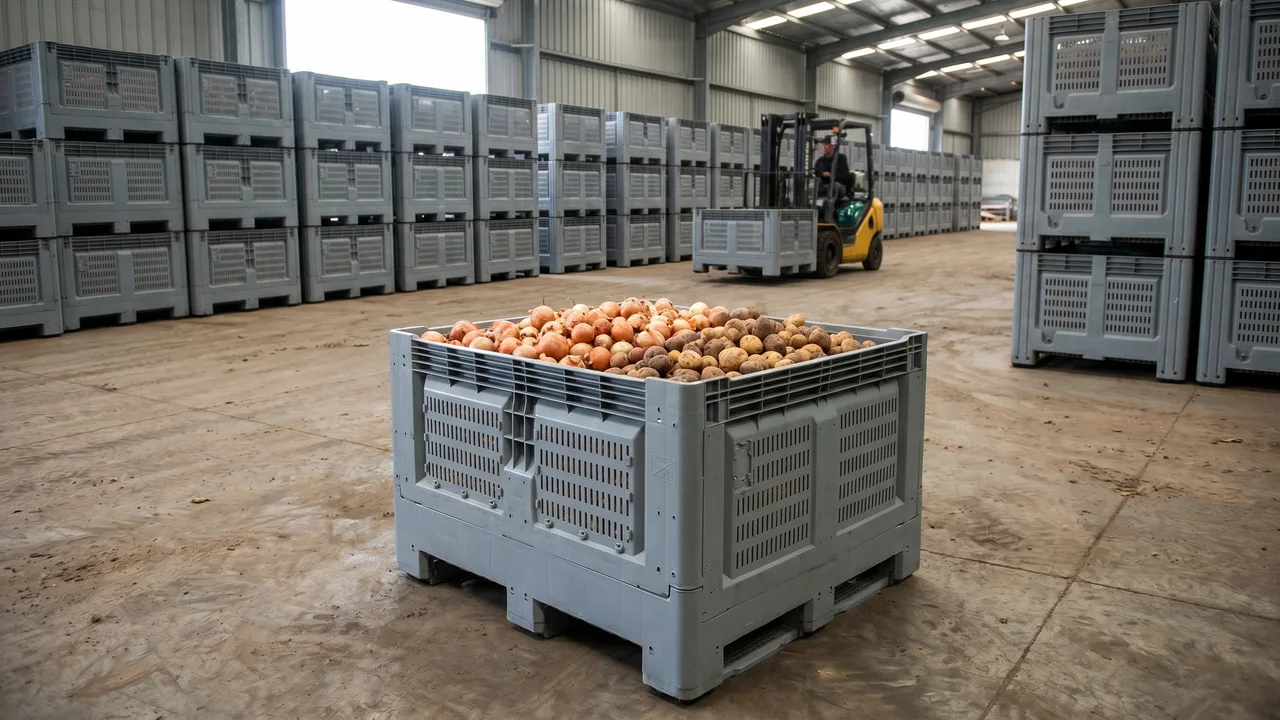
The answer was a bin that gives full vented capacity when it is working and disappears when it is not. This folding vented ISO bulk container stands 805 mm tall on the 1200 x 1000 mm footprint, with a 720 L body, and is moulded from food-grade HDPE rated to a heavy 7,000 kg static and 750 kg dynamic, strong enough to stack densely in store. The full-height venting keeps field heat and respiration moisture moving through the produce, which matters as much for hold quality as it does for curing. Critically, it collapses to a 293 mm folded height, so roughly three units stack into the floor space one erected box needs. Because the footprint matches the packer's existing 1200 x 1000 racking and handling, the bins slotted straight in with no changes to pallet patterns or forklift work.
The rollout
The packer introduced the folding ISO bins as a direct replacement for the worst of the timber boxes and ran them through a full season of harvest, wash, store and dispatch. In-season the venting and 7,000 kg static rating did the heavy lifting, dense, stable stacks with air moving through the load. The real change showed up at the shoulders of the season and on the empty return leg: instead of rigid boxes consuming coolroom and trailer space, crews folded the bins flat and reclaimed the volume. Storage that used to be clogged with idle bins came back, and return trucks carried collapsed empties three-to-one against the old rigid units. With that proven, the packer continued converting the timber fleet over to the folding format crop by crop.
An estimated result, clearly hedged
Any numbers here are estimates rather than guaranteed savings, and they vary with how much idle storage and backhaul a given operation actually carries. On that basis we estimate the collapse cut off-season storage and empty-return volume by roughly 65% versus rigid boxes, a saving that is felt in reclaimed floor space and lighter return trips rather than as a single line item. The HDPE body adds a second, longer-run estimate: where the timber it replaced was renewed every two to three seasons, the plastic is built for a decade-plus of washable, audit-friendly service, so the packer expects the recurring replacement spend to fall sharply over the asset's life. We are not quoting an absolute price or a promised return on investment; these are conservative working figures a packer can test against their own storage footprint, their return-freight bill and their historical timber-replacement budget, and on a sensible read the combination of reclaimed space and far lower replacement cost recovers the changeover within a couple of seasons.