
A custom-moulded lid brought a mixed bulk-container fleet back into covered service
A South-East Queensland third-party logistics operator running non-standard bulk containers.

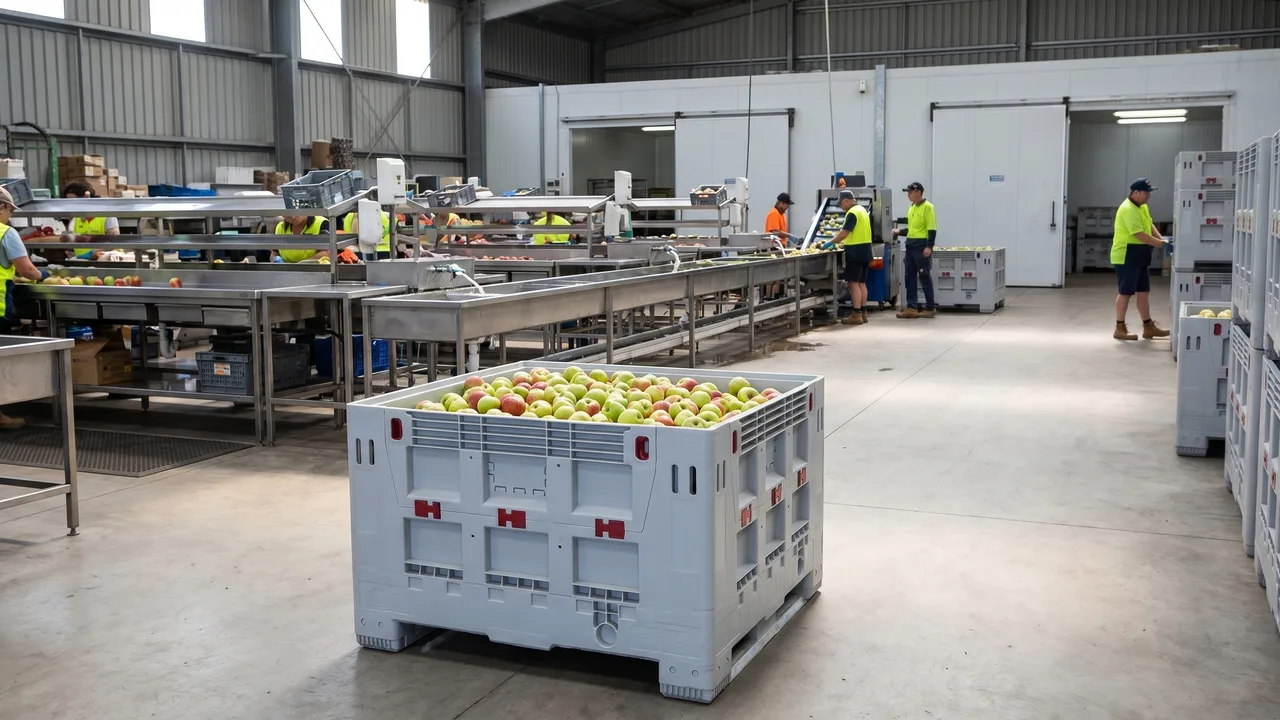
An orphaned fleet with no covers to fit
A South-East Queensland third-party logistics operator inherited a sizeable fleet of plastic bulk containers when it absorbed a smaller food-and-pet-food distributor. The containers themselves were sound, but they were a non-catalogue footprint left over from a supplier who no longer traded. The problem was the open tops. In a busy cross-dock that handled everything from dry pet-food kibble to packaged ambient grocery, an uncovered bulk bin is a contamination risk: airborne dust settles into the product, you cannot stack a second unit cleanly on top, and food-safety auditors flag any open container holding edible goods. The operator was facing an unappealing choice. Either retire dozens of otherwise serviceable containers and re-buy a complete matched fleet, or find a way to put lids on the bins they already owned.
Why a made-to-measure lid, not a stock one
Off-the-shelf lids only work if your container matches an off-the-shelf footprint, and these did not. A generic cover sized to a 1200x1000 ISO or 1162x1162 Australian-Standard box would have sat proud, gapped at the corners, or simply fallen through. That is exactly the situation the Custom Lid for Bulk Container (BPB-CUSTOM-L) exists to solve: it is built to whatever footprint and rim profile the customer specifies, so it seats correctly on bins that no standard part fits. The operator supplied the external dimensions and lip detail of the inherited containers, and the lid was tooled to match. Because it is a covering component rather than a structural load member, the lid carries no static, dynamic or racking rating of its own, it does the job a lid needs to do, which is to seal the top against dust, moisture and pests and provide a flat surface so units stack squarely two-high in the rack.
Rollout across the inherited fleet
The rollout was deliberately incremental. The operator ordered a first tranche of lids to cover the containers in the highest-risk food-contact lanes, confirmed the fit and the stacking behaviour on the warehouse floor, then extended the order across the rest of the fleet. Drop-on lids need no assembly, no tools and no line changes, so warehouse staff simply began capping bins as they were filled. Within a couple of weeks the open-top problem that had been holding the inherited containers out of food-grade service was gone, and the bins were stacking cleanly in beam storage rather than being floor-spread because nothing could safely sit on top of them.
The estimated result
The economics here are about avoidance rather than headline savings. Re-covering a serviceable bin runs at a small fraction of the cost of replacing it with a new lidded container, so the dominant figure is the capital the operator did not have to spend. We estimate that fitting custom lids deferred a fleet-wide replacement that would otherwise have been forced within a season, pushing that capital outlay out by several years while the original containers see out their natural service life. On the operating side, covering the bins is estimated to have cut top-layer product loss and contamination rejects, and removed a recurring audit finding tied to open food-contact containers. As a durable reusable, each lid is expected to ride along through the full multi-year life of the bin it caps rather than being a consumable cost. For a 3PL that lives on tight per-pallet margins, turning a looming fleet write-off into a modest lid order is the kind of quiet win that does not show up in a brochure but shows up clearly in the capital budget. The figures above are planning estimates rather than a quoted result, and the exact payback depends on fleet size, product mix and how aggressively the containers are cycled.