
A Werribee herb grower swaps crush-prone trays for the toughest short vented Euro bin
A market-garden herb grower near Werribee.

Bunched herbs, shallow trays and a lot of heat
A market gardener on the Werribee plains, bunching and field-packing soft herbs for wholesale and supermarket supply, had been working out of shallow timber trays. For a fragile, fast-respiring crop that is a hard combination: the trays crushed easily when stacked, splintered with handling, and trapped the field heat that herbs shed quickly after cutting. The grower was losing saleable product to both heat stress and physical damage, and replacing broken trays often enough that the timber was a recurring line on the books rather than a one-off buy.
Why this short vented Euro bin earned the swap
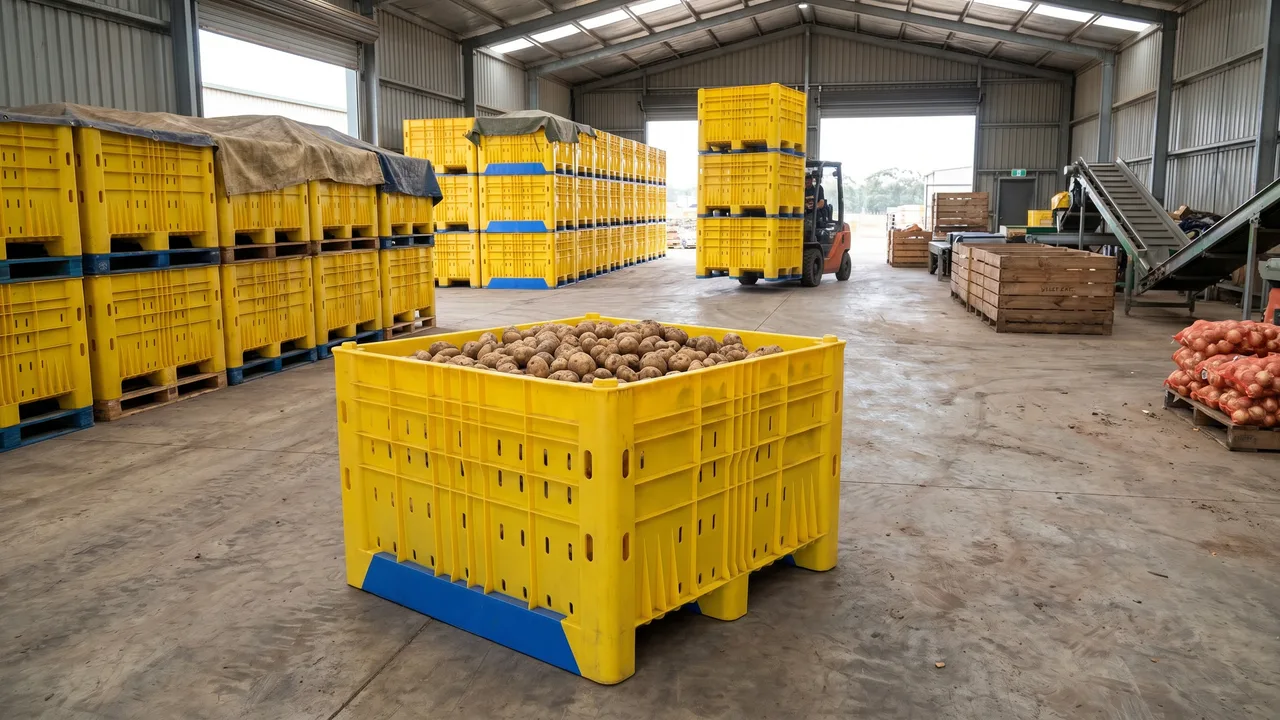
The grower moved onto the toughest short vented Euro standard bulk container in the range, a 1200 x 800 mm Euro footprint that stands just 440 mm tall, with an internal depth of around 300 mm and a 240 L body. That shallow depth is the whole point for delicate bunches: there is not enough column above the bottom layer to crush it, so the herbs at the base survive the stack. Full venting through the walls and floor lets field heat and respiration moisture escape fast, which is exactly what a cut herb needs in the first hours after harvest. The container is moulded from food-grade HDPE and PP, rated to a genuinely heavy 4,000 kg static and 700 kg dynamic, and runs 4-way forklift entry so it drops straight into standard handling.
Weight mattered too. At just 21.5 kg empty, a picker can lift and reposition a full or part-full bin by hand in the paddock without waiting on machinery, a real workflow gain over heavy, damp timber. And unlike a tray that shatters when it is dropped, the HDPE body simply shrugs off the knocks that were writing off the old units.
The rollout
Because the bin uses a standard Euro footprint, the grower folded it into the existing pick-and-pack flow without re-engineering anything, same pallet patterns, same forklift, same truck. They ran a starter pool through a full cutting cycle, watching two things: how the bunches at the bottom of the bin looked at the wholesaler, and how quickly the load shed heat after packing. Both moved the right way. The shallow profile kept the base layer presentable, and the open venting pulled heat out faster than the closed timber trays ever had. With the format proven on the most fragile lines, the grower extended the pool to cover the bulk of the herb program.
An estimated result, clearly hedged
These outcomes are estimates, not audited results, and they depend on crop, weather and how disciplined the cold chain is, herbs are unforgiving and no container fixes poor handling on its own. With that caveat, we estimate that cutting heat-and-crush loss on a fragile crop lifted saleable pack-out by an estimated 2-4% per pick, which on a high-turnover herb operation is a meaningful recovery against the cost of the bins. The durability story is just as important: where the old timber trays were being renewed regularly, the HDPE body is built to outlast them many times over, so the grower expects the recurring tray-replacement line to largely disappear and to amortise the plastic over many seasons of washable, food-grade service. We are deliberately not quoting a dollar figure or a guaranteed payback here; a grower can sanity-check the case against their own downgrade percentage and their historical spend on broken trays, and the conservative read is that less wastage plus far fewer replacements covers the changeover comfortably within its working life.