
How a Lockyer Valley packhouse retired rotting timber pallets with a recycled rackable HDPE pallet
A Lockyer Valley (QLD) vegetable packhouse.

The operator
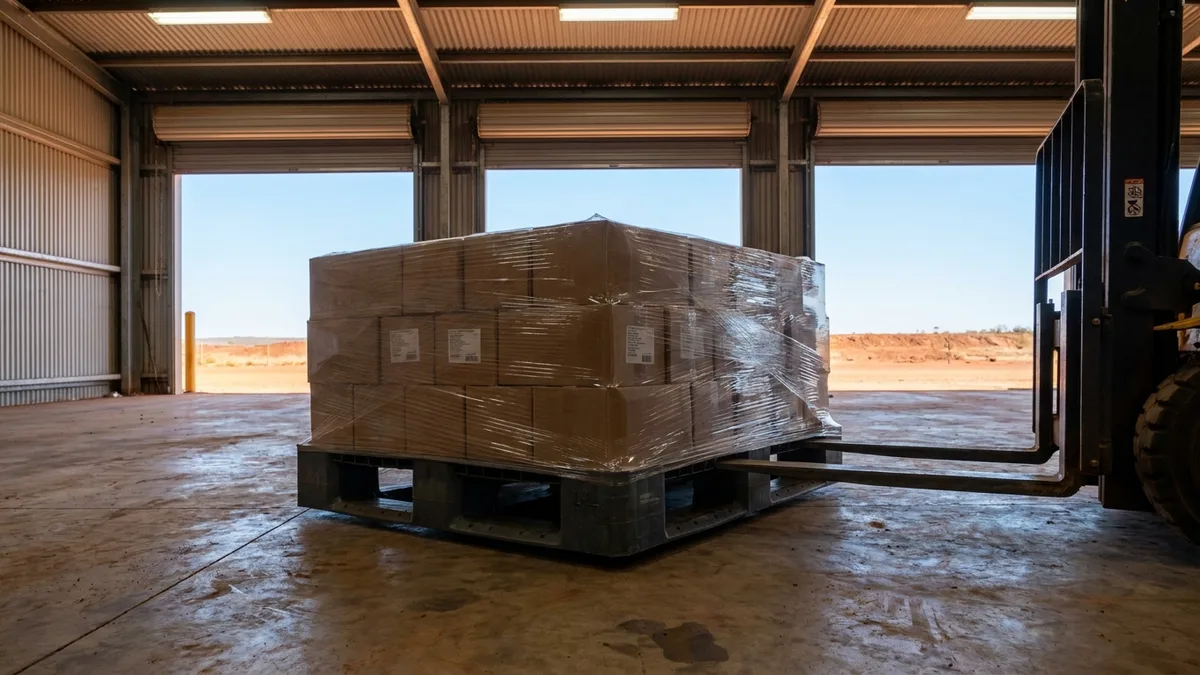
This is a vegetable packhouse in Queensland’s Lockyer Valley, washing, grading and palletising a high volume of fresh produce through a chilled, wash-down environment for the domestic supermarket trade. Pallets here live a hard life — they pass through wash lines, sit in the coolroom and go into beam racking — and the timber boards the packhouse had been using were quietly failing on every one of those fronts.
The problem with the previous setup
Timber pallets run through a wash-down chiller do exactly what timber does around water: they soak it up, rot, harbour soil and bacteria, and fail food-safety audits. They also splinter and throw nails, which is the last thing wanted near washed produce. The packhouse was buying and dumping export-grade timber repeatedly, copping wash-line rejects when boards failed inspection, and carrying the audit risk of a porous, contamination-prone surface in a food zone.
Why this product
They standardised on the medium-duty Australian-Standard plastic pallet (1160×1160×160 mm, recycled HDPE, 17.6 kg, 10,000 kg static, 2,000 kg dynamic and a genuine 2,000 kg racking rating, on a 3-skid base). It hoses clean between runs, does not rot or absorb wash-water, and presents a non-porous surface that passes the audits timber was failing. Moulded from recycled material, it also carries an exceptional strength-to-weight ratio for a pallet rated to 10,000 kg static.
Crucially, the packhouse sized its racking to the 2,000 kg racking figure — the unsupported beam load the pallet is rated for — rather than the far higher 10,000 kg static headline. Designing to the published racking rating is what keeps beam loading compliant with AS 4084; using the static number for rack design would have been a serious and unsafe error, because static capacity assumes the pallet is fully supported on the floor, not bridging two beams. With loads kept to 2,000 kg per position, the pallet racks safely and survives the coolroom and the wash line in between. At 17.6 kg the pallet is also light enough for pickers to reposition by hand on the wash line, despite carrying a full Australian-Standard 1160×1160 footprint and a 2,000 kg dynamic rating for forklift work.
How the rollout went
The packhouse converted its wash-line and coolroom pool first, where timber rot and audit failures had been worst, then extended the plastic pallets into the racking with positions planned to the 2,000 kg rack figure. The deck wiped down after greasy and soiled handling, the wash-line rejects tied to failed timber stopped appearing, and racking stayed within AS 4084 because the design load matched the pallet’s rated racking capacity rather than its static one. The recycled-HDPE construction also fit the packhouse’s sustainability messaging to its supermarket customers, a useful secondary benefit alongside the food-safety gain.
The result (estimated)
Each HDPE pallet replaces an estimated six to eight timber boards over its life, and by ending the rot-and-dump cycle on export-grade timber we estimate the packhouse reaches payback inside an estimated two to three seasons. Beyond the hardware saving, the non-porous deck cut wash-line rejects and removed the audit non-conformances that a porous, splinter-prone timber surface had been generating in a food zone. Racking strictly to the 2,000 kg published figure kept the installation AS 4084-compliant under daily use. All of these are estimates that depend on throughput, wash regime and racking configuration, and are offered as estimates rather than a price quote.