
A South-East Queensland Produce Exporter Clears Biosecurity on a Hygienic One-Way Pallet
A South-East Queensland fresh-produce exporter shipping chilled lines to Asia.

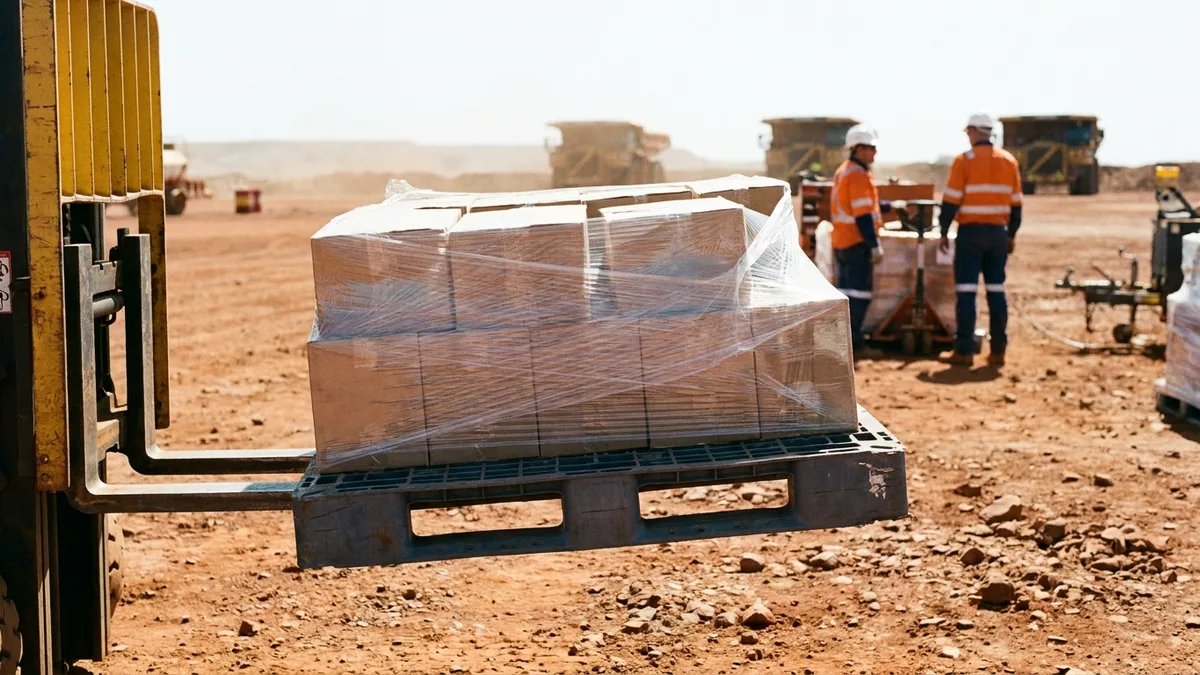
The operation
This is a fresh-produce exporter in South-East Queensland, sending chilled lines to Asian markets where produce-import inspections are strict and a contaminated or non-compliant pallet can hold or reject a whole load. They needed an export pallet that was both hygienic enough for food contact and exempt from timber biosecurity rules, and they needed it in modest quantities, because their export volumes don't justify huge pallet runs.
The problem with the old handling
Timber export pallets carried two risks into a strict produce-import inspection. There was the contamination and rejected-load risk: splinters, soil and the porous timber surface itself are exactly what overseas produce inspectors flag, and a flagged load on chilled fresh produce is an expensive problem. And there was the ISPM-15 burden, every timber consignment needed fumigation or heat treatment and a certificate before it could leave. For an exporter shipping food, both the hygiene risk and the treatment cost were unwelcome on every shipment.
Why this pallet
They moved to the BPB-E1210SL, a one-way ISO export pallet built for shipping food, meat, fruit, vegetables and pharmaceuticals, and available in Australia in low quantities. It is a 1200 x 1000 mm pallet at just 120 mm tall, moulded from PC and HDPE, weighing 7.5 kg, rated to 3,000 kg static and 1,000 kg dynamic on a cruciform full-perimeter base. Three things made it fit. It is food-suitable, giving a hygienic, splinter-free deck against chilled produce. It is plastic, so it is exempt from ISPM-15, no fumigation, no certificate. And it is available in low quantities (minimum order around 40), which suits an exporter who can't commit to a large pallet run.
The cruciform full-perimeter base gives even support under a palletised chilled load, and at 7.5 kg on a one-way pallet the tare stays modest for the export leg.
The rollout
The low minimum order was what made this practical, the exporter could buy in line with actual shipment volumes rather than over-committing. They standardised the ISO footprint on their Asian chilled lanes, switched documentation to drop the treatment step, and ran the pallets one-way so there was no return-leg logistics to manage on a food-export movement.
The result, estimated
The treatment saving is the clear cost line, framed as an estimate. The treatment-free, splinter-free deck saved an estimated meaningful sum per pallet in avoided fumigation versus timber, and over its life displaces an estimated 5-plus one-trip timber pallets, an estimate on an avoided cost, not a price quote, with the exact figure depending on the lane and provider. On a regular chilled-export program that recurs on every consignment.
The larger, harder-to-price benefit is risk. By presenting a hygienic, food-suitable plastic deck instead of porous timber, the exporter removed the contamination and rejected-load risk that timber carried at strict produce-import inspections overseas, and a single avoided load rejection on chilled fresh produce dwarfs the per-pallet treatment saving. We frame the dollar figure as an estimate and the rejection benefit as a risk reduction rather than a number, because you can't predict exactly when a timber load would have been flagged. The structural point stands: a food-grade, treatment-exempt, low-MOQ pallet built precisely for strict overseas produce inspections.