
A grocery supplier upgraded shabby timber display pallets to a durable plastic half-pallet
An Australian grocery supplier running in-store promotional displays.

Promotional displays presented on tatty timber
A grocery supplier ran in-store promotional displays, the quarter-pallet stacks of product that sit at the end of an aisle or in a high-traffic spot to push a promotion. The displays were being presented on timber quarter-pallets, and those were letting the brand down. Timber display pallets scuff, splinter and grey off with repeated store handling, and a shabby, damaged pallet under a promotion looks cheap on the shop floor and undermines the very product it is meant to showcase. Worse, splintering and breakage meant displays were being rejected at the store, and staff were losing time re-merchandising product off failed pallets. The supplier wanted a display base that stayed presentable through repeated cycles and stopped shedding splinters.
Why the plastic display half-pallet
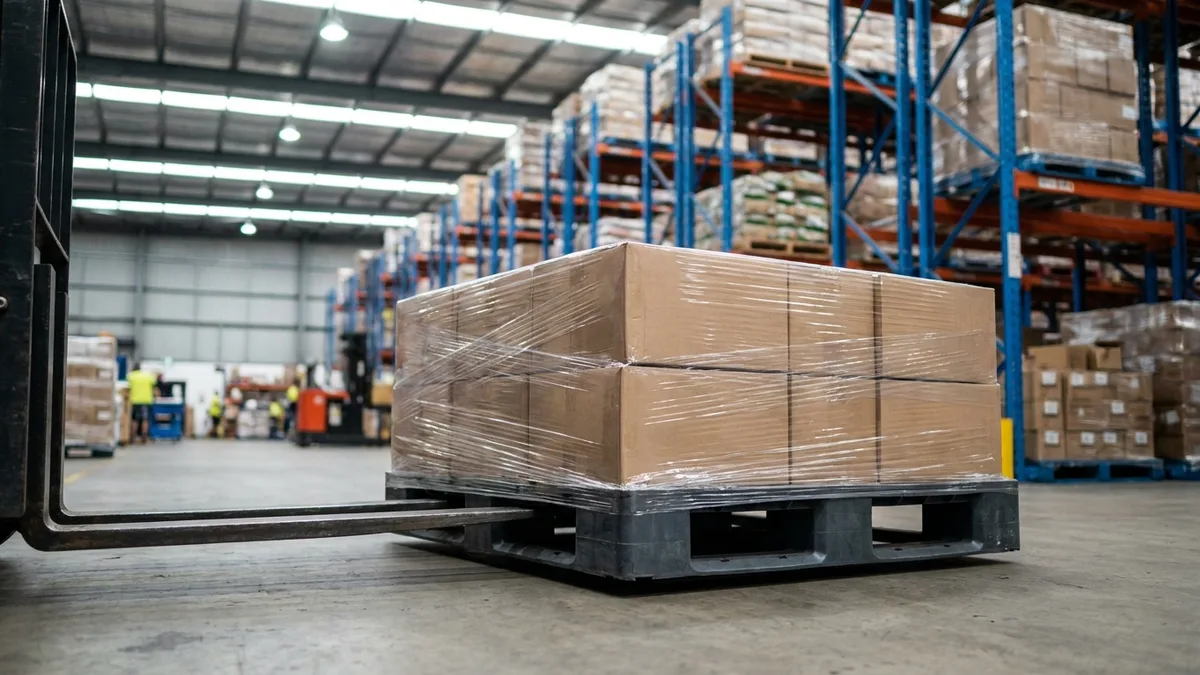
The supplier switched to the Plastic Display Pallet (BPB-E86), a moulded plastic "half pallet" built for exactly this job. At 800x600 mm with three integrated skids, it suits a pallet jack for easy store positioning and presents product on a clean, consistent moulded deck rather than rough timber. The PP/HDPE construction is the difference: it does not splinter, scuff or grey off the way timber does, so the display looks tidy and on-brand cycle after cycle, and there are no splinters to shed onto product or shoppers. It is rated 1500 kg static and 700 kg dynamic, comfortably enough for a stacked promotional display, and at 6 kg it is light enough for staff to handle on the floor. The three integrated skids are moulded in rather than nailed on, so there is nothing to work loose under repeated store handling. For a supplier whose display pallet is effectively part of the brand presentation, a clean, durable plastic base is a small change with an outsized look-and-feel payoff.
Rollout across promotional displays
The supplier moved its promotional displays onto the plastic half-pallets, building product stacks on the clean moulded decks and positioning them in-store with a pallet jack via the integrated skids. The units survived repeated store handling without the splintering and breakage that had been causing display rejections, and the consistent presentation lifted how the promotions looked on the shop floor. Damaged-pallet swap-outs and the re-merchandising they triggered largely fell away.
The estimated result
The value is in durability and presentation. We estimate the plastic display units lasted an estimated 5-6 times longer than the timber display pallets they replaced, because they do not splinter or break down under repeated store handling, turning a frequently replaced consumable into a long-lived reusable. Just as important for a supplier, the clean moulded deck removed the rejected-display problem and is estimated to have cut the re-merchandising labour caused by tatty, damaged timber arriving at store. And the consistent, on-brand look of product presented on a tidy plastic base supports the promotion rather than detracting from it, a benefit that is real even if it is harder to put a single number on. These are planning estimates rather than a guaranteed result, and the realised life and labour savings depend on how hard the pallets are cycled and the store-handling conditions. For a grocery supplier, swapping shabby timber for a durable plastic display half-pallet is a low-cost change that pays back in both fewer replacements and a better shelf-edge impression.