
A Sunraysia table-grape grower runs one 31L folding crate for fruit and a winery side-line
A Sunraysia table-grape grower with a small winery side-line.

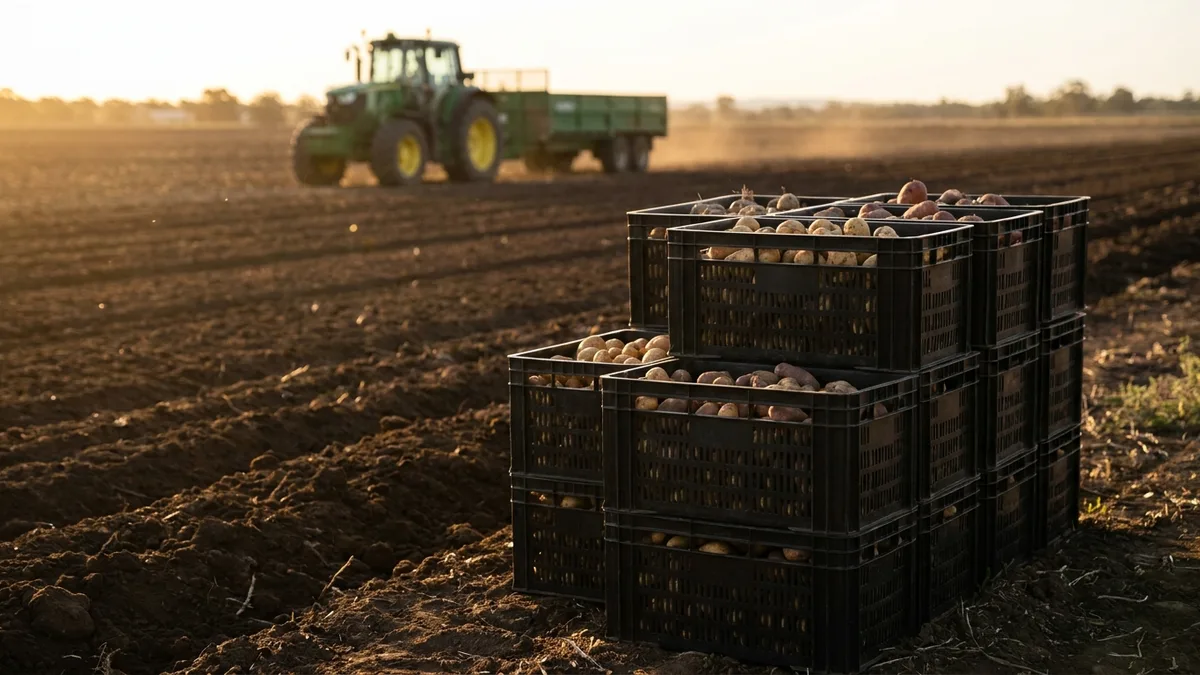
One crop, two jobs, and leased cartons eating the margin
A table-grape grower in the Sunraysia district also ran a small winery side-line, and the two needed slightly different handling: gentle bunch packing for the fresh fruit, and short transfers of fruit destined for the cellar. Historically that meant leased pooled cartons on the short-haul runs and a mix of borrowed boxes for the winery transfers, cartons that crushed when stacked, leaked condensation onto the fruit, and carried a per-trip cost that never went away. Packing was slower than it needed to be because the boxes were fiddly to make up and de-nest on the line.
Why a 600 x 400 folding vented crate covered both lines
The grower standardised on a single 600 x 400 x 150 mm folding vented crate with a 31 L capacity and ergonomic lock handles. The open venting is the key for grapes: it protects the fruit from the condensation and sweating that closed cartons trap in transit, keeping bunches presentable through the short cold chain. The same crate suits the winery transfers, so one unit and one size now does both jobs. The ergonomic lock handles speed line packing, crews make up and grab crates faster than the leased cartons allowed, and at a folded height of just 28 mm the empties collapse to a fraction of erected volume for the trip back from the cold store. The PP body cross-stacks for stable palletised dispatch and stands up to repeated handling far better than single-trip card.
The rollout
The grower replaced the leased cartons on their own short-haul runs first, where the per-trip lease cost was most visible, and ran the folding crates through both the fresh-pack line and a winery transfer cycle. The lock handles immediately took time out of packing and de-nesting, and the venting kept the fruit drier in transit than the cartons had. Folding the empties flat for the return run was the other obvious gain, crates that had been riding back as rigid boxes now collapsed to almost nothing. With the crate proven across both uses, the grower retired the leased-carton arrangement on their controlled runs and made the 31 L crate the single standard for fruit and cellar alike.
An estimated result, clearly hedged
These are estimates, not guaranteed savings, and they move with pack volume, labour rates and how far the empties travel. On that basis we estimate the grower saved roughly 2 to 3 labour hours per pack day in handling and de-nesting once the lock-handle crates replaced the fiddly leased cartons, and cut empty-crate return freight by an estimated 65% once the units folded flat for the leg back from the cold store. Spread over an assumed multi-year crate service life, replacing recurring carton lease costs with a reusable the grower owns outright is expected to lower cost per dispatch materially. We are not quoting an absolute price or a fixed return; a grower can check the case against their own pack-day labour, their carton lease line and their return-freight volume, and the conservative read is that faster packing plus collapsed backhaul plus the end of per-trip lease fees pays the crates back within a couple of seasons.