
A regional meat processor got a hygienic wash-down pallet at a reconditioned price
A regional Australian meat processor needing a hygienic solid-deck pallet for wash-down areas.

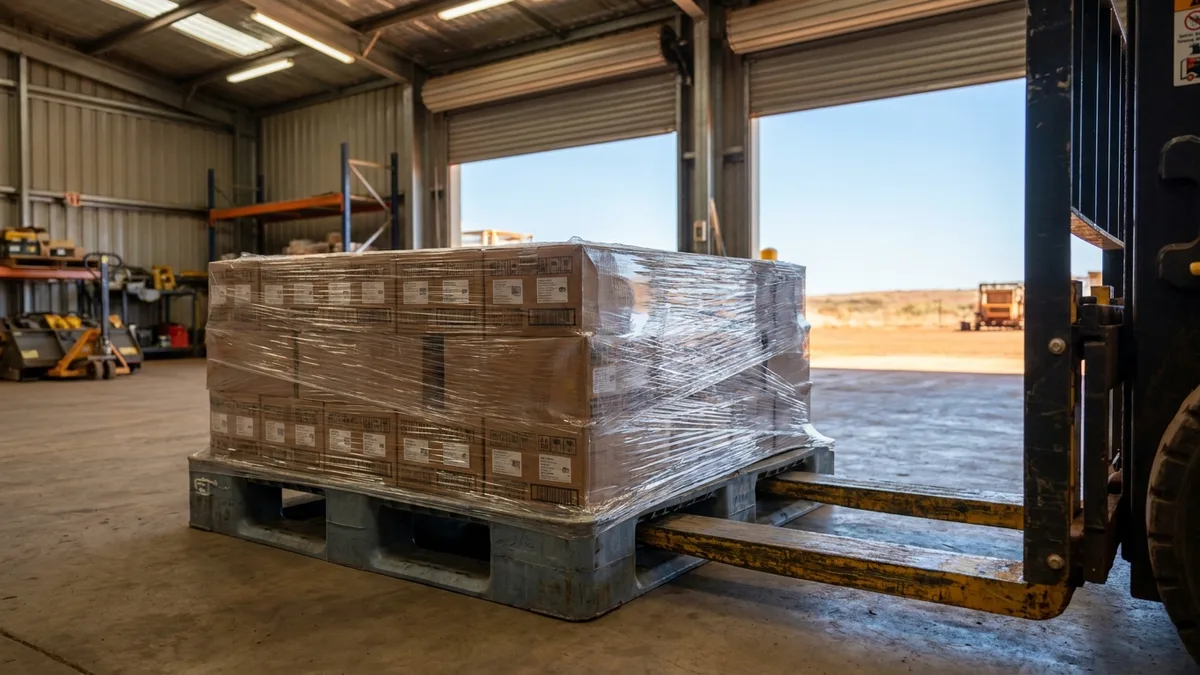
Timber in a food-contact wash-down zone
A regional meat processor needed a hygienic, solid-deck pallet for its wash-down areas, the parts of the plant where pallets are sprayed, sanitised and sit in direct or near contact with food product. Timber was exactly the wrong material there: it absorbs water, harbours bacteria in its grain and joints, sheds splinters into a food-contact zone, and fails the sanitation sign-off that a meat plant lives or dies by. The processor knew it needed to move to a sealed plastic deck, but it also wanted to contain the capital cost of re-fleeting an entire wash-down area, especially for a pallet that would be standardised across many positions.
Why the second-hand hygienic ISO pallet
The processor adopted the Heavy Duty Hygienic ISO Pallet (BPB-W1210USHD) in used condition. Buying reconditioned was the key to the economics: a second-hand hygienic pallet gives the seamless, sanitisable surface a meat plant requires at a reconditioned price well below new. The pallet's specification suited the duty. On the 1200x1000x155 mm ISO footprint, moulded in PP/HDPE with a solid flat deck, it presents a smooth, crevice-free surface that hoses and sanitises cleanly, no grain, no joints, no splinters for bacteria to hide in. It is rated 6000 kg static and 1300 kg dynamic, and carries a genuine 1000 kg racking figure. The processor was careful to plan racked loads to that 1000 kg racking number rather than the 6000 kg static headline, which keeps the beam storage compliant under AS 4084. A used pallet in a wash-down area is a sound choice precisely because the hygienic surface is what matters, and that surface is delivered just as well by a reconditioned unit as a new one.
Rollout into the wash-down area
The reconditioned pallets went into the wash-down and food-contact positions in place of the timber they replaced. Staff sanitised them on the normal cleaning cycle, where the solid HDPE deck wiped and drained clean rather than soaking up wash-water, and racked them to the 1000 kg figure to stay within AS 4084. The seamless surface passed the sanitation checks that timber kept failing, bringing those positions cleanly through audit.
The estimated result
The dominant saving is capital. We estimate the used hygienic pallet cost an estimated 40-50% less than a new equivalent, which is what made standardising across the wash-down area affordable rather than a major capital project. Operationally, moving off timber removed the bacteria-harbouring crevices and splinter risk from a food-contact zone, which is estimated to have cut the sanitation rejects and audit non-conformances tied to the old timber decks, a benefit that, in a meat plant, protects far more value than the pallet costs. Racking strictly to the published 1000 kg figure kept the storage AS 4084 compliant, avoiding the compliance exposure of over-loading beams. These are planning estimates rather than a quoted result, and the realised capital saving depends on the reconditioned stock available and how many positions are converted. For a meat processor that needed hygiene without a heavy capital hit, the reconditioned route delivered the food-grade surface at a fraction of new-fleet cost.