
How a Riverina onion packer cut centre-of-stack rot with a folding vented pallet box
A Riverina (NSW) brown-onion grower-packer running curing and cold storage.

The operation
This is a mid-sized brown-onion grower-packer in the NSW Riverina, lifting several thousand tonnes a season and curing the crop on-site before it moves to domestic retail DCs and the occasional export consignment. Onions are unforgiving in storage: they keep respiring after harvest, they sweat, and a bulb that sits in trapped humidity in the middle of a deep stack will rot and take its neighbours with it. The packhouse manager described it bluntly as paying for product twice — once to grow it, once to throw it away.
The problem with the old handling
For years the crop was cured and stored in solid-walled timber bins. The walls blocked airflow, so the curing air the team pushed through the shed never really reached the core of each bin. Condensation collected against the boards, the timber itself held moisture, and every few weeks someone would tip out a bin and find a soft, spoiled pocket at the centre. The bins also splintered, shed the odd nail into the line, and were heavy and awkward to reposition by hand. Out of season they sat in the yard at full height, eating shed space that the business would rather have used for anything else.
Why this product
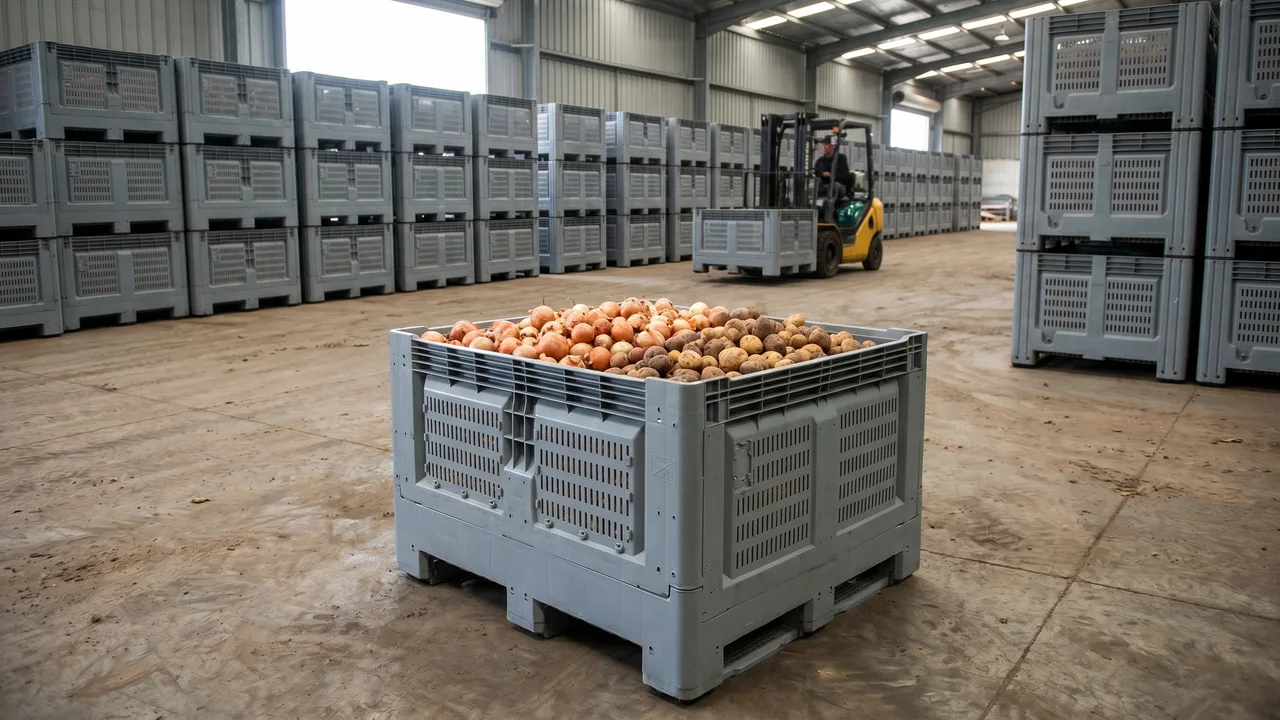
They standardised on the folding vented Australian-Standard pallet box. The specifications matched the job almost line for line. The full-height vented walls let curing and respiration air move straight through the bulb mass instead of stalling against a solid board, which is the single most important thing for an onion bin. The food-grade PP and HDPE construction hoses clean and survives the wash-down and audit regime that a retail-supplying packhouse lives under, where timber simply fails swabs. The external footprint of 1162×1162×785 mm drops onto their existing Australian-Standard racking and handling, and the 1082×1082×640 mm internal cavity gives a genuine 750 litres of usable volume. With a 3,000 kg static rating they can stack bins deep in the store; the 1,000 kg dynamic rating means a forklift moves them full without drama; and the 500 kg racking figure gives a defined, compliant number to design beam storage around rather than guessing off the static headline. Crucially for a seasonal business, the box folds down to just 299 mm. That is the part that changed how they think about the off-season.
How the rollout went
They began with a single block's worth of bins as a trial through one curing cycle, then expanded once the centre-of-stack spoilage they were used to seeing simply did not appear. The 53 kg empty weight is heavier than a flimsy crate but well within what a forklift handles all day, and the smooth moulded walls meant no more snagged bags or splinter complaints on the grading line. The biggest operational change came at the end of the season: instead of parking rigid bins in the yard, the crew collapses them to 299 mm and stacks the empties roughly four-to-one against the erected height. The same shed bay now holds about four times the number of bins it used to, and when empties do travel — back from a DC, or between the block and the shed — the truck carries far more per trip.
The estimated result
The headline win is shrink. On a crop where stored-onion losses can run into the high single digits, the team believes the move to genuine through-stack ventilation has cut spoilage by an estimated few percentage points of stored volume. On a multi-thousand-tonne intake, even a two-to-three-percent reduction in rot recovers more value in a single season than the bins cost to buy — we frame that as an estimate, not a guarantee, because actual shrink swings with weather, cultivar and store conditions year to year. On top of that, folding the empties is estimated to reclaim around 75% of the off-season storage footprint the rigid timber bins demanded, and to lift the payload on any empty-return leg by a similar margin. Against timber bins that were being condemned and replaced every two to three seasons, an HDPE/PP box with a decade-plus service life also pulls the long-run replacement spend down sharply. The packer's own summary: the bin earns its keep on shrink alone, and the freight and replacement savings are the bonus.