
How a Lockyer Valley grower stopped crushing soft lines with a shallower vented half bin
A Lockyer Valley mixed brassica and root-vegetable grower.

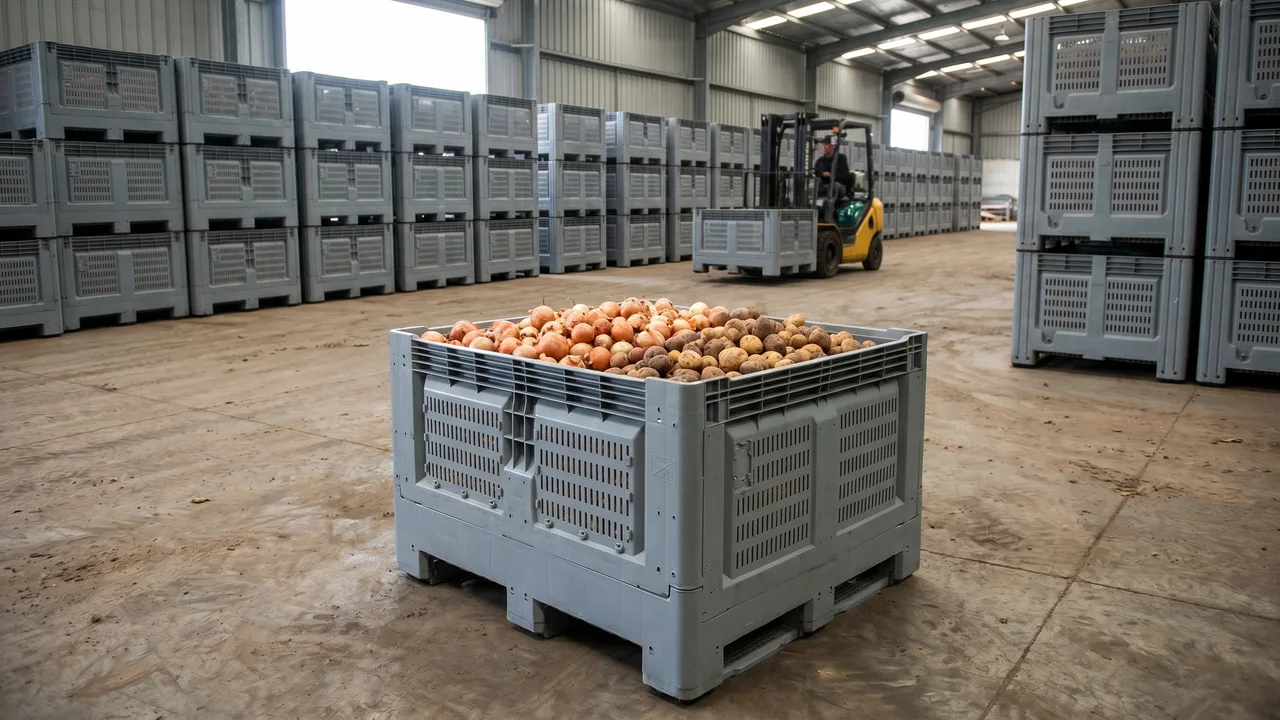
A deep-bin habit that was bruising the bottom of every load
A mixed-vegetable grower in the Lockyer Valley, cutting brassica lines alongside carrots and parsnips for supermarket programs, had standardised years earlier on full-height timber and plastic bins. For dense crops that worked, but for softer and more delicate lines the depth was the problem, not the solution. Product loaded near the top sat fine; product at the bottom carried the full weight of everything above it and arrived at the wash line bruised, scuffed and downgraded. Add the moisture that the old timber bins held against the crop, and the periodic audits the packhouse had to pass, and the grower was paying twice: once in lost pack-out and once in non-conformances.
Why a low, vented half bin instead of another full-height box
The fix was to stop fighting depth and choose a bin built shallow on purpose. This low folding vented pallet box runs to the Australian-Standard 1162 x 1162 mm footprint but stands only 560 mm tall, with an internal depth of just 400 mm, roughly half a conventional bulk box. That shallower column means the crop near the base no longer carries a punishing head of weight, so crush-related downgrade drops away on the lines that used to suffer most. The body is moulded from food-grade HDPE rated to 2,800 kg static and 700 kg dynamic, with a 350 kg rackable figure for safe beam storage, and full-height venting that keeps field heat and respiration moisture moving through the load rather than trapping it the way the old timber did.
Two practical details sealed it. At 470 L the box holds a sensible single-layer-plus volume without tempting anyone to over-fill it, and at 44 kg empty it is light enough for a picker to reposition by hand in the paddock, a meaningful difference from heavy, water-logged timber that needed the forklift just to shuffle. The bin also folds to a 280 mm collapsed height, so between crops and on the empty return leg it stacks roughly four units into the footprint one rigid box would occupy.
The rollout
The grower trialled a modest pool on their two softest lines first, running them through harvest, wash and dispatch alongside the legacy bins so the comparison was direct. The shallower fill profile showed up immediately at the wash line: fewer bruised units coming off the bottom of the bin, and less time spent picking out damaged product before pack. Because the footprint matched their existing racking and forklift workflow, there was no handling relearning, crews simply filled them less deep and moved on. Once the soft lines were proven, the pool was widened to cover the rest of the delicate cutting program, with the deeper full-height bins kept back for the genuinely dense crops that suit them.
An estimated result, clearly hedged
The grower has not published audited numbers, and any figures here are estimates rather than guarantees, because pack-out depends on crop, season and handling discipline. On that basis we estimate that limiting bottom-of-bin crush lifted saleable pack-out on the affected soft lines by an estimated 2-4% per season, the kind of gain that, on a high-volume cutting program, recovers the cost of the bins well inside their service life. The vented HDPE body also sidesteps the moisture retention and rot that had the old timber failing audits, so the grower expects to retire those boards rather than replace them on the usual two-to-three-season cycle, and to get a decade-plus of washable, audit-friendly service from the plastic. Folded empties returning four-to-one against rigid boxes add a further, smaller saving on backhaul volume out of season. None of these figures is an absolute price or a promised return; they are conservative working estimates a grower can test against their own bruise rates and replacement budget.